What Makes Antique Mother-of-Pearl Cufflinks Worth Collecting?
Last Updated: October 25, 2026
Quick Summary
Antique mother of pearl cufflinks are worth collecting because they embody superior craftsmanship, use rare materials, and appreciate in value as original production runs become harder to source, with authentic pieces authenticated through hallmarks, maker's marks, and age-appropriate wear patterns that distinguish them from modern reproductions.
- Hallmarks indicating metal purity and maker's marks are legally required on genuine antique pieces and command 40-60% premiums over unmarked examples.
- Three construction methods, doublet, solid backing, and foil-backed, each leave distinctive wear patterns that reveal age authenticity under magnification.
- Pieces from 1880s-1910 command higher prices than 1920s-1940 examples due to smaller production runs and lower survival rates.
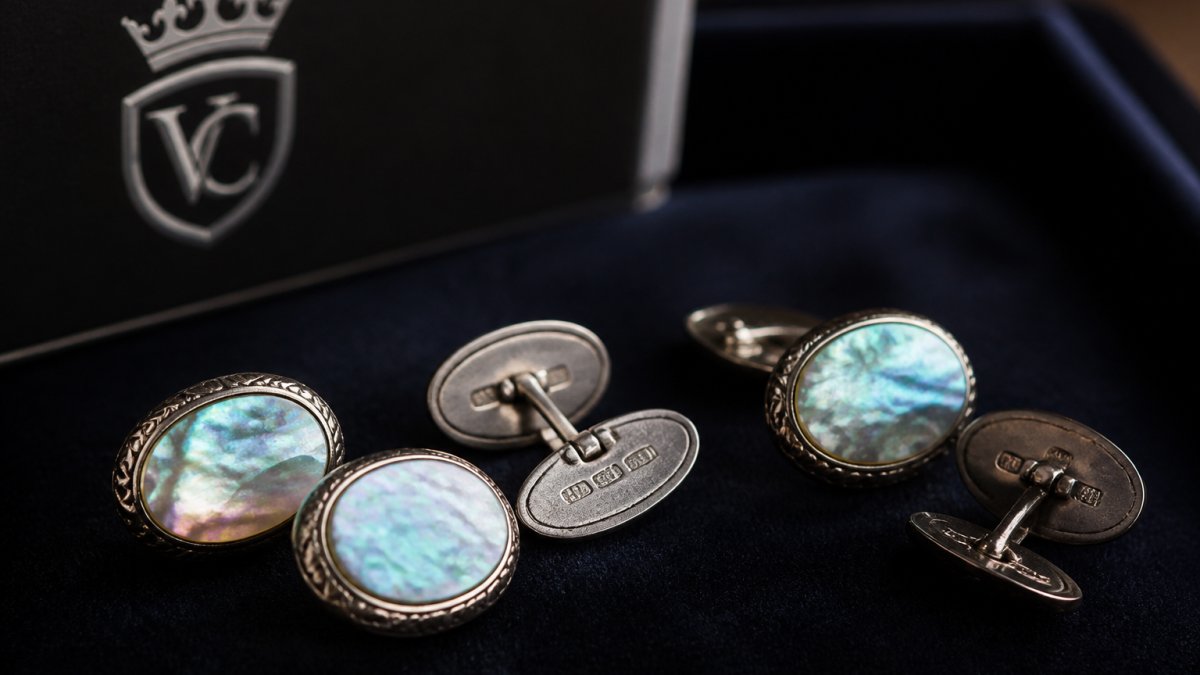
- Iridescence intensifies with age in genuine antiques through microscopic nacre oxidation, while modern reproductions display more uniform coloring.
- Store antique mother of pearl cufflinks at 40-50% relative humidity in soft cloth pouches, never in plastic bags or ultrasonic cleaners.
Table of Contents
- The Enduring Appeal of Antique Mother-of-Pearl Cufflinks
- How to Identify Vintage Cufflinks and Distinguish Them from Modern Reproductions
- Materials, Metal Settings, and Craftsmanship in Antique Designs
- Understanding Antique Cufflinks Value and Price Factors
- Mother-of-Pearl Cufflinks Care and Preservation
- Antique Versus Vintage Versus Modern: Which Suits Your Purpose
- Building Your Collection: What to Look for When Buying
- Frequently Asked Questions
The Enduring Appeal of Antique Mother-of-Pearl Cufflinks
Antique mother of pearl cufflinks embody a moment in menswear history when craftsmanship, material quality, and design restraint converged to create pieces that outlast trends by generations.
The appeal runs deeper than aesthetics. A genuine antique mother of pearl cufflink carries authentication embedded in its construction, hallmarks stamped into precious metal, wear patterns that tell a story, iridescence that shifts under light in ways modern manufacturing struggles to replicate.
Three factors make antique mother of pearl cufflinks worth collecting: rarity of materials, authenticity of age, and likelihood of appreciation. Unlike contemporary cufflinks designed for a single season, antique pieces gain value as original production runs become harder to source, and the nacre develops iridescence that deepens with age rather than fading.
How to Identify Vintage Cufflinks and Distinguish Them from Modern Reproductions
The difference between authentic antique mother of pearl cufflinks and modern reproductions reveals itself through systematic inspection of construction evidence, not appearance.
Hallmarks, Maker's Marks, and Metal Dating
Every legitimate antique cufflink made from precious metal carries a hallmark indicating metal purity and often the assay office location.
Maker's marks appear alongside hallmarks. A maker's mark, initials or a symbol unique to the craftsperson or manufacturer, adds significant value if it's traceable to known workshops. Research from the Assay Office's historical records documents thousands of maker's marks registered across centuries.
On authentic antique cufflinks, hallmarks appear on the metal backing or setting, never on the pearl itself; marks on the pearl face are an immediate red flag. Genuine hallmarks were struck with force and appear crisp and deep, while reproductions show shallow, blurry stamps from lighter pressure on cheap base metals.
Construction Methods and Wear Patterns
Antique mother of pearl cufflinks employ one of three construction methods, each leaving distinctive wear patterns that reveal age authenticity: the doublet setting, the solid backing, or the foil-backed technique.
Doublet construction sandwiches a thin layer of mother-of-pearl over a backing of mother-of-pearl, shell, or glass, common from the 1880s through 1920s.
Solid backing cufflinks feature mother-of-pearl adhered directly to sterling silver or gold.
Foil-backed cufflinks use reflective metal foil behind the pearl to enhance iridescence, popular in Victorian and Edwardian pieces. The foil degrades predictably, creating visible cracking or separation when held at an angle; modern reproductions use stable adhesives, so pristine foil is another authentication marker.
Reproduction manufacturers now artificially age foil backing, but the tell is uniformity: genuine aging is random and asymmetrical, while artificial aging appears mechanically consistent.
Materials, Metal Settings, and Craftsmanship in Antique Designs
The metal setting determines both durability and value trajectory. Antique mother of pearl cufflinks appear in sterling silver, gold alloys, and occasionally antique silver, each with distinct characteristics and price implications.
Sterling Silver, Gold, and Antique Silver Settings
Sterling silver dominates the antique cufflink market because it balanced affordability and prestige during peak production (1880-1940). Its settings oxidize predictably into a dark patina collectors recognize as authentic aging, and this patina protects the underlying metal from further corrosion, explaining why sterling silver antiques survive better than many modern base-metal pieces.
Gold settings (9-, 15-, and 18-carat alloys) command premium prices because gold resists oxidation entirely; a gold-set piece can spend a century in a drawer and emerge nearly unchanged.
Antique silver, distinct from sterling, refers to pieces predating the 1880s sterling standard, typically 90-95% pure silver with copper or other metals comprising the remainder.
Pearl Quality, Iridescence, and Color Variations
Mother-of-pearl quality varies dramatically between antique sources. Nacre came from different mollusk species by geographic origin: Australian abalone produced green and blue iridescence, Japanese pearl oysters yielded silvery-white nacre, and European sources generated warmer cream tones with occasional pink undertones.
Iridescence intensifies with age in genuine antiques because nacre oxidizes at a microscopic level, enhancing light diffraction.
Color variation within a pair indicates age authenticity: antique sources were inconsistent, and two pearls from the same oyster shell could display different base colors and iridescent ranges. Perfectly uniform pairs are suspicious, suggesting modern manufacturing where nacre is sorted and treated for consistency.
Cloudiness in the nacre tells a specific story: light cloudiness indicates age and decades of humidity exposure and is a positive authentication signal when hallmarks and wear patterns are authentic, while severe cloudiness suggests extreme neglect or compromised materials.
Understanding Antique Cufflinks Value and Price Factors
The value of antique mother of pearl cufflinks depends on measurable factors collectors and dealers use consistently. Understanding them helps you avoid overpaying for common pieces or missing rare examples.
Condition, Age, and Rarity
Condition follows a standard scale. Mint means unworn with original finish intact, extremely rare for pieces over 50 years old and commanding premium prices. Excellent shows minimal wear, no missing pearl sections, and crisp, legible hallmarks.
Age matters more than most collectors realize. Cufflinks from the 1880s-1910 (Victorian and Edwardian eras) command higher prices than 1920s-1940 examples because earlier production runs were smaller and survival rates lower, so a genuine Edwardian pair in excellent condition typically appreciates faster as scarcity increases.
Rarity comes from several sources: maker's marks from prestigious London or Parisian workshops add substantial value over unmarked examples, unusual shapes (hexagonal, octagonal, or art deco geometric) command premiums over standard round or oval cufflinks, and intact matching pairs are rarer than singles, influencing pricing dramatically.
Auction Results and Market Trends
Auction houses provide transparent pricing data for antique mother of pearl cufflinks. According to Christie's auction archives and historical sales records, pairs of authenticated Victorian mother-of-pearl cufflinks in excellent condition with maker's marks have sold in ranges reflecting their rarity and provenance.
Collectors increasingly value authentication documentation and condition grading over raw material weight: a pair with a maker's mark tracing to a known craftsperson commands 40-60% premiums over unmarked pieces of identical material and condition, reflecting growing collector sophistication.
Seasonal variations affect pricing: demand peaks during formal event seasons (October through December for holidays, January through March for spring weddings), while summer months see softer pricing as fewer formal events occur.
Antique mother-of-pearl cufflinks are valued based on several consistent factors that determine their market price and investment potential.
| Factor | Characteristics | Impact on Value |
|---|---|---|
| Condition | Mint, excellent, good, fair, or poor | Mint condition extremely rare, commands premiums |
| Age | 1880s-1910 versus 1920s-1940 | Earlier pieces appreciate faster due to lower survival rates |
| Maker's marks | Traceable to known London or Parisian workshops | Commands 40-60% premiums over unmarked pieces |
| Shape | Round, oval, or unusual geometric designs | Hexagonal, octagonal, art deco shapes command premiums |
| Pairing | Intact matching pairs versus singles | Matched pairs significantly rarer and higher priced |
| Market timing | October-December and January-March seasons | Demand peaks during formal event seasons |
Mother-of-Pearl Cufflinks Care and Preservation
Proper care determines whether antique mother of pearl cufflinks remain investment-grade pieces or deteriorate into damaged curiosities. The nacre layer is more fragile than precious metals, requiring specific handling protocols.
Cleaning, Storage, and Restoration Basics
Never use ultrasonic cleaners or aggressive polishing on mother-of-pearl: vibration can separate the nacre from its backing, and abrasives scratch the delicate surface. Learn how to clean gold cufflinks while preserving your legacy for practical guidance on maintaining your antique pieces.
For stubborn oxidation on metal settings, use a specialized silver or gold cleaner appropriate to the metal type, applied to the metal only and kept away from the pearl. Follow the instructions, rinse with distilled water, and dry completely. Never soak antique cufflinks, since prolonged water exposure can degrade the adhesives bonding pearl to backing.
Storage matters as much as cleaning. Keep antique mother of pearl cufflinks at 40-50% relative humidity in a cool, dry environment, since fluctuating humidity makes pearl and metal expand and contract at different rates, eventually separating.
Antique Versus Vintage Versus Modern: Which Suits Your Purpose
The terminology matters: it determines what you're acquiring and what preservation challenges you'll face.
Antique technically means 100+ years old, placing pieces from 1926 and earlier into this category. Antique mother of pearl cufflinks carry the authentication challenges and rewards discussed throughout this guide.
Vintage describes pieces from roughly 1920-1980. Vintage mother of pearl cufflinks occupy a middle ground: old enough to show genuine age characteristics but recent enough that manufacturing records sometimes survive.
Modern cufflinks represent contemporary craftsmanship applied to traditional designs.
The choice depends on your purpose. For investment and heirloom value, antique mother of pearl cufflinks justify the authentication effort and premium pricing. For authentic vintage character without extreme rarity, vintage examples deliver compelling value.
Building Your Collection: What to Look for When Buying
Systematic evaluation prevents costly mistakes when acquiring antique mother of pearl cufflinks. Develop a personal checklist before any purchase.
First, verify hallmarks and maker's marks through reference materials.
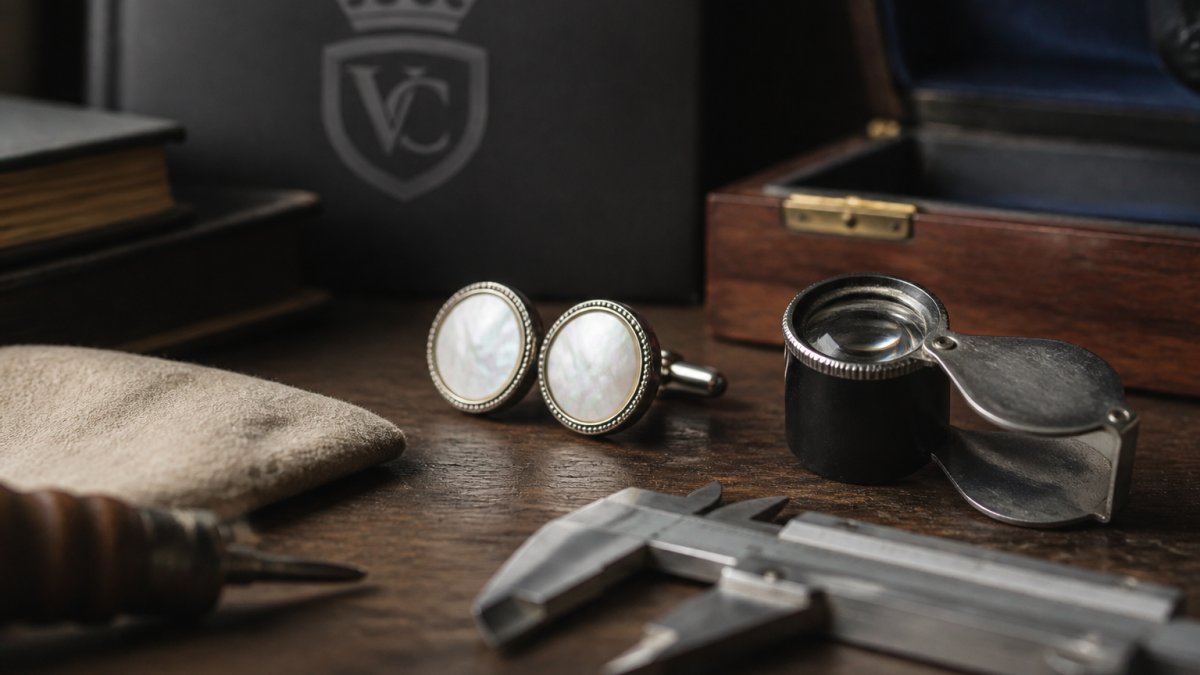
Second, examine the pearl-to-metal interface under 10x magnification with a jeweler's loupe.
Third, assess condition honestly.
Fourth, verify pairs are truly matched. Examine both cufflinks under consistent lighting. Slight color variation is normal and actually authenticates age.
Fifth, document provenance when available. Purchase receipts, previous owner information, or auction house documentation adds value and authentication confidence.
Finally, investing in heirloom quality cufflinks requires viewing your purchase as a long-term acquisition rather than a seasonal accessory.
Antique mother of pearl cufflinks demand more scrutiny than contemporary accessories, but that scrutiny protects your investment and ensures you're acquiring genuine heritage pieces rather than expensive reproductions.
Frequently Asked Questions
How can I tell if antique mother-of-pearl cufflinks are authentic?
Authentic antique mother-of-pearl cufflinks bear maker's marks or hallmarks stamped into the metal setting, typically on the reverse or edge. Sterling silver pieces are marked .925 or .950; gold cufflinks show 9ct, 15ct, or 18ct stamps. The pearl itself should have natural iridescence and color variation rather than uniform appearance. Examine the cufflink mechanism, antique designs use simpler posts or chains, while modern reproductions often have overly polished surfaces or synthetic nacre that feels plastic rather than organic.
What affects the value of antique mother-of-pearl cufflinks?
Value depends on condition, age, metal content, and rarity of design. Cufflinks from the 1920s-1940s typically command higher prices than later vintage pieces. Sterling silver and gold settings increase value significantly compared to base metal. Condition matters greatly, intact cufflinks with no cracks in the pearl and functioning mechanisms are worth 30-50% more than damaged pairs. Maker's marks from established silversmiths add premium value, as do unusual shapes or documented historical provenance.
How should I clean and care for mother-of-pearl cufflinks?
Clean mother-of-pearl cufflinks gently with a soft, lint-free cloth slightly dampened with warm water and a drop of mild dish soap. Avoid harsh chemicals, ultrasonic cleaners, and prolonged water exposure, which can damage the nacre and weaken adhesive bonds in the metal setting. Dry immediately with a soft cloth. Store in a cool, dry place away from direct sunlight, ideally in individual cloth pouches or a lined box to prevent scratching. For tarnished silver settings, use a specialized silver cloth rather than abrasive polishes.
Are antique mother-of-pearl cufflinks suitable for everyday wear?
Antique mother-of-pearl cufflinks are best reserved for formal occasions and special events rather than daily wear. While durable when cared for properly, the pearl is more delicate than solid metal and can crack if struck or flexed repeatedly. The cufflink mechanism may loosen over time with frequent use. If you wear cufflinks only occasionally, weddings, black-tie events, or formal business settings, antique pieces will maintain their condition and value far longer than pieces worn multiple times per week.