The Best Dress Shirt Fabrics for French Cuffs
Last Updated: November 3, 2026
Quick Summary
The best dress shirt fabrics for French cuffs are two-ply cotton poplin and broadcloth for formal wear, with twill and royal twill offering more texture and wrinkle resistance. A folded cuff doubles the cloth at the wrist, so the weave needs enough body to hold a clean edge. Mid-weight cloth around 4 to 6 oz is the sweet spot.
- Poplin and broadcloth are plain weaves that produce the crispest cuff and suit black tie.
- Twill resists creasing through long days but is warmer than poplin in hot rooms.
- Two-ply fabric gives a folded cuff more body than single-ply cloth.
- Lightweight cloth under about 4 oz can let a double cuff go limp by mid-afternoon.
- A well-interfaced mid-weight twill cuff holds a cufflink post steady.
Table of Contents
- Why Fabric Decides Whether French Cuffs Look Sharp
- The Best Fabric for Dress Shirts Worn with Cufflinks
- Cotton French Cuff Dress Shirts: Grading, Ply, and What You Pay For
- Non-Iron French Cuff Shirts: What the Finish Does to the Fabric
- Fabric Weight, Cuff Structure, and Seasonal Selection
- How to Wear French Cuffs Without Getting the Details Wrong
- Matching Your Cufflink Finish to the Shirt You Choose
- Frequently Asked Questions
Why Fabric Decides Whether French Cuffs Look Sharp
The best dress shirt fabrics for French cuffs are two-ply cotton poplin and broadcloth for formal wear, with twill and royal twill offering more texture and wrinkle resistance. Fabric choice matters more with French cuffs than with any other shirt style, because a folded cuff doubles the cloth at the wrist. A flimsy weave collapses there; a well-made one holds a clean edge all evening. The same pair of cufflinks can look distinguished on a structured cuff and cheap on a limp one.
French cuffs, also called double cuffs, are shirt cuffs folded back on themselves and fastened with cufflinks instead of buttons. The fold doubles the fabric at the wrist, which is why weight, weave, and cotton quality show up there first.
That single structural fact should drive every fabric decision you make. Below, we break down how each fabric behaves at the cuff, what it costs you in care, and which one suits your calendar.
The Best Fabric for Dress Shirts Worn with Cufflinks
The best fabric for dress shirts worn with cufflinks is a fine, two-ply cotton in a tight weave, because the cuff needs body to hold its fold. Looser weaves and heavier textures sag or pucker at the wrist within an hour of putting the shirt on. Two weaves do most of the work here: poplin and twill.
Poplin and Broadcloth: The Crisp, Formal Choice
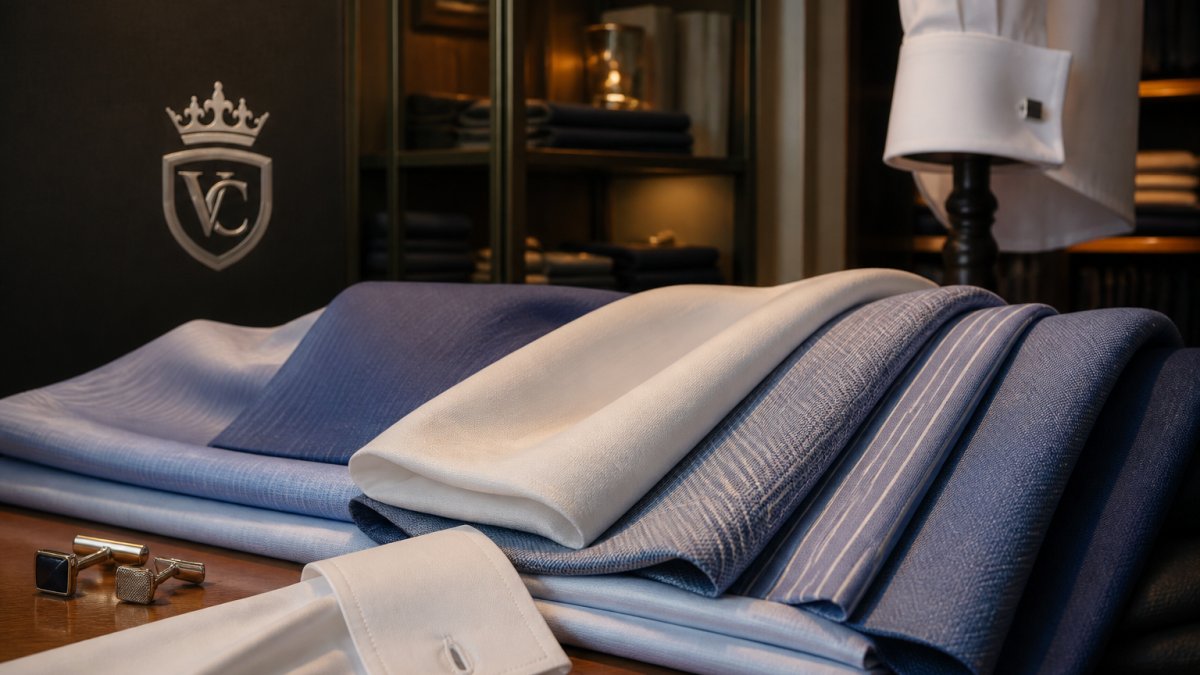
Poplin and broadcloth are plain weaves with a smooth, flat surface, and they produce the crispest cuff. Poplin uses finer yarns for a subtle sheen; broadcloth is slightly heavier and more matte. Both take a fold cleanly and stay sharp under a suit sleeve.
The trade-off is transparency. Fine white poplin can show an undershirt, so check opacity in daylight before committing. This is also the weave to choose for black tie and tuxedo shirts, where a flat, formal surface is the point.
Twill and Royal Twill: Texture, Drape, and Wrinkle Resistance
Twill weaves a diagonal rib into the cloth, which gives it more weight, better drape, and noticeably better wrinkle resistance than poplin. Royal twill is the finer version, with a softer hand and a subtler line.
Twill suits long days and travel. The denser weave resists creasing through meetings and flights, and the texture reads as business attire rather than formalwear. Where it falls short: twill is warmer than poplin, so it is a poor pick for hot rooms and summer weddings.
Cotton French Cuff Dress Shirts: Grading, Ply, and What You Pay For
Cotton dress shirts are commonly graded on fiber length and ply, and both show up at the cuff. Long-staple fibers, including Egyptian cotton, spin into smoother, stronger yarns; short-staple fibers produce a rougher yarn that pills and softens faster at the fold. Two-ply, or two-fold, fabric twists two yarns together, giving the cloth more body than single-ply, and body is what a folded cuff needs.
Here is how the grades compare in practice:
| Fabric grade | Feel | Cuff performance | Care demand |
|---|---|---|---|
| Single-ply, standard cotton | Adequate | Softens and creases quickly | Easy |
| Two-ply, standard cotton | Smooth | Holds the fold well | Moderate |
| Two-ply, Egyptian cotton | Silky, dense | Excellent structure and drape | Higher |
| Cotton-rich blend | Variable | Less breathable | Easy |
Read the table as a trade-off, not a ranking. Single-ply is not automatically bad, a tightly woven single-ply poplin can outperform a loosely woven two-ply at the cuff, but two-ply gives you more margin for error, and long-staple two-ply gives you the most. A common mistake is paying for a luxury label on single-ply cloth. Turn the cuff over and read the specification before you decide.
Thread count is often overstated in shirting. Ply and staple length tell you more about how a cuff will age than a large thread-count figure, so treat thread count as one data point, not a grade.
Blends and finishes have a real place. A cotton-rich blend with a small amount of elastane adds stretch and recovery, which helps a slim-cut French-cuff shirt move without pulling at the wrist; a polyester-cotton blend resists wrinkles but breathes less and can look flat under evening light.
Watch out: a shirt sold as "Egyptian cotton" without a ply specification may be single-ply, and the label alone does not guarantee cuff performance, check the ply and feel the cuff's body before you buy.
Non-Iron French Cuff Shirts: What the Finish Does to the Fabric
Non-iron shirts are commonly treated with a resin finish that keeps the cloth flat through wear and washing. The convenience is real, and for daily office wear it is hard to beat. If you plan to wear these shirts routinely, our buyer's guide to durable cufflinks for daily office wear covers what holds up to regular use. The cost is feel: the finish coats the fibers, so the cloth is less breathable and slightly stiffer than untreated cotton.
Repeated high-heat tumble drying can break down a resin finish faster than most other factors. Follow the care label, and expect the treatment to fade over years of washing.
Fabric Weight, Cuff Structure, and Seasonal Selection
Fabric weight, measured in ounces per square yard, influences how a cuff behaves across the year. Lightweight cloth under about 4 oz feels cool and drapes softly, but at a folded double cuff it can look thin and let the fold go limp by mid-afternoon. Mid-weight cloth around 4 to 6 oz is the sweet spot for French cuffs: enough body to hold a clean fold, enough breathability for most of the year.
Weight interacts with weave, so compare them together rather than in isolation. A 4.5 oz poplin and a 4.5 oz twill weigh the same but behave differently at the wrist: the poplin reads crisp and flat, the twill reads textured and resists creasing better. That is why a single "best weight" number misleads, the weave sets the surface, the weight sets the body.
| Weave | Typical weight range | Breathability | Opacity | Drape | Cuff behavior | Ease of ironing |
|---|---|---|---|---|---|---|
| Poplin / broadcloth | 3.5-5 oz | High | Low in fine white | Crisp, flat | Holds a sharp fold; can look thin if under 4 oz | Easy |
| Twill | 4.5-6.5 oz | Moderate | High | Fluid, weighted | Holds fold with minimal interfacing; resists creasing | Moderate |
| Royal twill | 4-5.5 oz | Moderate | High | Soft, subtle line | Holds fold well; dressier than standard twill | Moderate |
| Oxford (plain or basket) | 5-7 oz | Moderate | High | Textured, casual | Too casual for most French-cuff settings | Easy |
| Cotton-linen blend | 3.5-5 oz | Very high | Low to moderate | Relaxed, slubby | Wrinkles at the fold; best for warm-weather casual | Hard |
Seasonal selection follows directly from that table:
- Summer and warm climates: lightweight poplin (4 oz and up to preserve opacity), high-twist cotton, or a cotton-linen blend, but accept that linen wrinkles at the fold and is a poor match for black tie.
- Year-round: mid-weight two-ply poplin or royal twill in the 4.5-5.5 oz range covers most calendars.
- Winter: heavier twill (6 oz and above), flannel-adjacent textures, and deeper formal colors; the extra body holds a crisp cuff under a jacket all evening.
Cuff structure matters as much as the cloth. A folded double cuff typically needs interfacing to keep its shape. Feel the cuff between thumb and forefinger: it should have a firm, even body, not a soft flop. A well-interfaced mid-weight twill cuff will hold a cufflink post steady; a limp lightweight poplin cuff lets the post rotate and the fabric pucker around the holes. If you wear heavy or oversized cufflinks, bias toward mid-weight twill or a well-interfaced poplin, the cuff has to carry the metal, not the other way around.
Shirts labeled "wrinkle-resistant" or "easy-care" often use resin-treated cloth that can feel stiff at first; check the weight and hand-feel at the cuff before buying.
How to Wear French Cuffs Without Getting the Details Wrong
Wearing French cuffs well comes down to proportion and restraint. For deeper styling and etiquette details, see our guide to French cuffs with a suit. The cuff should extend roughly half an inch beyond the jacket sleeve, and the cufflink should sit centered in the four holes without pulling the fabric.
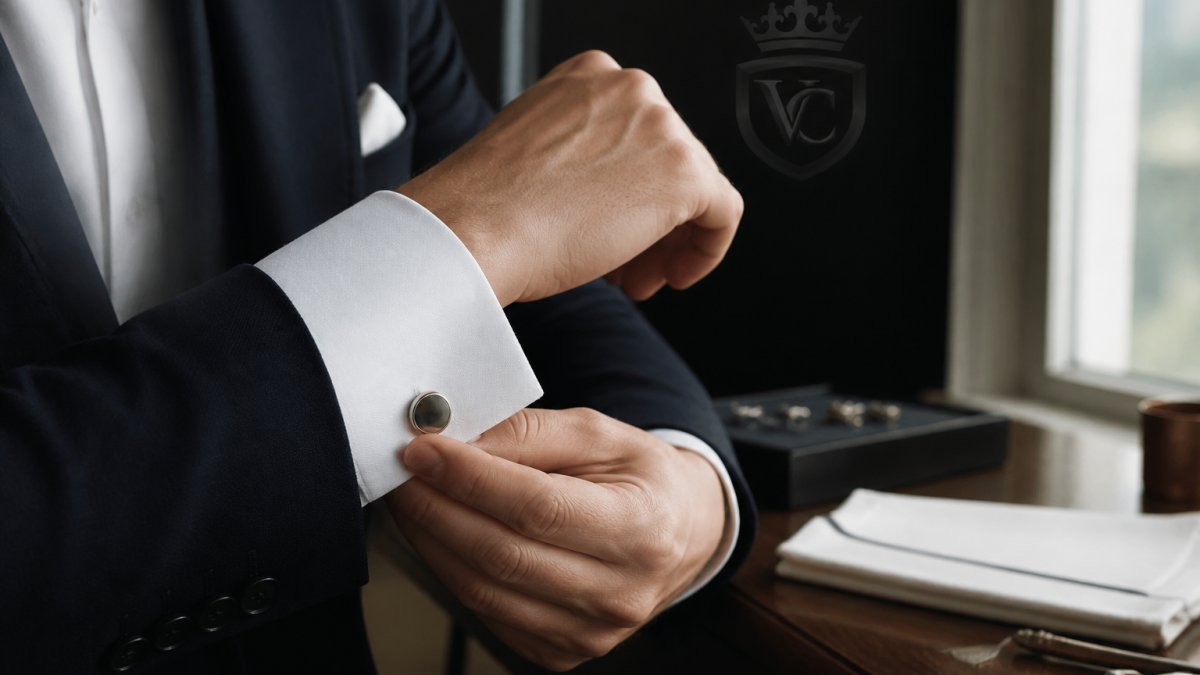
A few rules we would give any client:
- Pair French cuffs with a spread collar and a proper knot; the formality should match top to bottom.
- Keep the cufflink understated in daylight settings and let metal do the talking after six.
- Skip French cuffs with casual jackets, short sleeves, or open collars.
- Check that your cufflink posts fit the buttonholes; loose posts rotate and look sloppy.
If you are weighing cuff structures before you buy, our comparison of French cuff versus barrel cuff construction explains why the fold changes everything about fit and formality.
Matching Your Cufflink Finish to the Shirt You Choose
Cufflink finish should answer to the shirt, not the other way around. White and pale blue poplin pair well with polished sterling silver; cream and textured twill can suit warmer metal tones. Match metal to your watch and belt hardware, and keep one finish per outfit.
For readers deciding between metals and styles, our guide on how to choose cufflinks for a formal suit covers pairing considerations. When you are ready, you can Shop the Collection on the VALCREST™ website for current options and pricing.
A word on care: rotate your shirts, wash less often than you think, and press the cuff flat while slightly damp. Fabric that is treated well holds its shape for years.
Frequently Asked Questions
What is the best fabric for a French cuff dress shirt?
Poplin is the safest choice for formal wear because its tight weave holds a sharp crease and shows cufflinks cleanly. Two-ply cotton poplin in a solid white or light blue covers weddings, black tie optional events, and boardroom days. If you want more texture and less ironing, royal twill works well for business attire, though it reads slightly less formal than poplin at a gala.
Is cotton or twill better for French cuff shirts?
They are not opposites. Twill is a weave, and most quality twill shirts are still 100% cotton. The real question is weave performance: poplin is lighter, smoother, and crisper; twill is denser, drapes more heavily, and resists wrinkles better. For a French cuff you plan to wear weekly under a suit, twill holds up well. For a tuxedo shirt or a formal wedding, choose poplin.
Are French cuff shirts still in style?
Yes, in the settings where they belong. French cuffs remain standard for black tie, formal weddings, and conservative business dress. They look out of place in casual offices and weekend settings, which is why some men wear them rarely. A single well-made white poplin French cuff shirt covers most formal occasions for years, so you do not need a large rotation.
How do you care for a French cuff dress shirt?
Wash 100% cotton French cuff shirts in cool water and skip the dryer, which breaks down fibers and sets wrinkles. Press the cuff flat on both sides before folding it back, and iron while slightly damp for a clean edge. Non-iron finishes tolerate machine drying better but lose effectiveness over repeated hot cycles. Store the shirt on a hanger with the cuffs unfastened so the fabric does not crease at the fold.
The shirt fabric you choose sets the ceiling on how sharp your French cuffs can look, and the cufflink you fasten through them sets the tone. If you want accessories built to match that standard, VALCREST™ crafts cufflinks in sterling silver and vermeil with a timeless design made to last generations. Explore the collection and finish the details that separate a well-dressed man from a memorable one. Shop the Collection.