Cufflinks for Business Formal Attire: A 2026 Guide
Table of Contents
- When Cufflinks Are Appropriate in Business Settings
- Cufflinks for a Job Interview: Making the Right Impression
- How to Wear Cufflinks: Mechanics and Technique
- Best Cufflinks for Business Attire: Materials and Finishes
- French Cuff Shirt with Suit: Complete Outfit Coordination
- Three Essential Cufflink Styles for Business Formal Occasions
- Cufflink Etiquette and Workplace Appropriateness
- Frequently Asked Questions
Last Updated: October 8, 2026
When Cufflinks Are Appropriate in Business Settings
Cufflinks for business formal attire signal attention to detail and respect for occasion, but not every business setting calls for them.
The decision hinges on three factors: dress code, industry norms, and your role's visibility. A law firm managing partner wears cufflinks to client meetings; a tech startup engineer may never need them.
Business Formal vs. Business Professional vs. Business Casual
Business formal is the highest dress code tier and demands cufflinks for men in most contexts: tailored suits, dress shirts with French cuffs, and accessories that announce intention.
Business professional sits one tier down: tailored suits and dress shirts, but less ceremonial.
Business casual rarely requires cufflinks. Blazers, dress pants, and collared shirts define this code, and cufflinks would read as overdressed. Save them for events outside the office.
Industry and Seniority Considerations
Finance, law, and consulting expect cufflinks at senior levels; junior associates might skip them until they reach a certain rank.
Tech and creative industries rarely demand cufflinks even at the executive level; in a startup they can read as formal to the point of discomfort.
Manufacturing, sales, and client-service roles depend on context: cufflinks elevate formal client meetings but are unnecessary on the production floor or in casual client environments.
Cufflinks for a Job Interview: Making the Right Impression
A job interview is not the place to experiment.
For finance, law, or consulting roles, wear understated cufflinks that signal you understand the culture and respect the occasion.
For tech or creative roles, skip them unless the company's culture explicitly values formal dress. Showing up over-formal can suggest you don't understand the environment.
The logic is simple: cufflinks communicate that you take the opportunity seriously. In formal industries that's a strength; in casual ones it can backfire. Read the room first.
How to Wear Cufflinks: Mechanics and Technique
Understanding how cufflinks work prevents embarrassing moments. A cufflink has two parts: the face (the visible decorative piece) and the post or backing (what fastens through the cuff holes).
Lay your dress shirt flat and locate the buttonholes on the cuff. Insert the post through both holes, one from the top, one from the bottom. The face sits on the outside of the wrist; secure the backing on the inside, flush without twisting or shifting.
French Cuff vs. Barrel Cuff Compatibility
French cuffs are the formal standard: they fold back on themselves, creating a double layer of fabric with four buttonholes, a design made for cufflinks.
Barrel cuffs are standard on most dress shirts: a single layer with one or two buttons.
Pair cufflinks with French cuff shirts, a combination designed to work together; barrel cuffs work in a pinch but French cuffs are the proper pairing.
When shopping, check the cuff type: French cuffs are labeled as such.
Fastening Methods and Closure Types
Cufflinks use different closure mechanisms.
Fixed post cufflinks have a solid backing: simpler to fasten, but harder to remove if the post is tight.
Chain link cufflinks connect the two faces with a short chain: flexible and less likely to damage delicate cuffs, but less common in formal business settings.
For business formal attire, whale back or fixed post designs are safest: straightforward, reliable, and universally understood as professional.
Best Cufflinks for Business Attire: Materials and Finishes
Material communicates value and durability. Cufflinks for business formal attire should be made from metals that age well and resist tarnishing.
Sterling Silver and Gold Plating
Sterling silver is the standard for professional cufflinks: durable, elegant, and developing a patina that suggests history and use. It pairs with virtually any suit and tie combination.
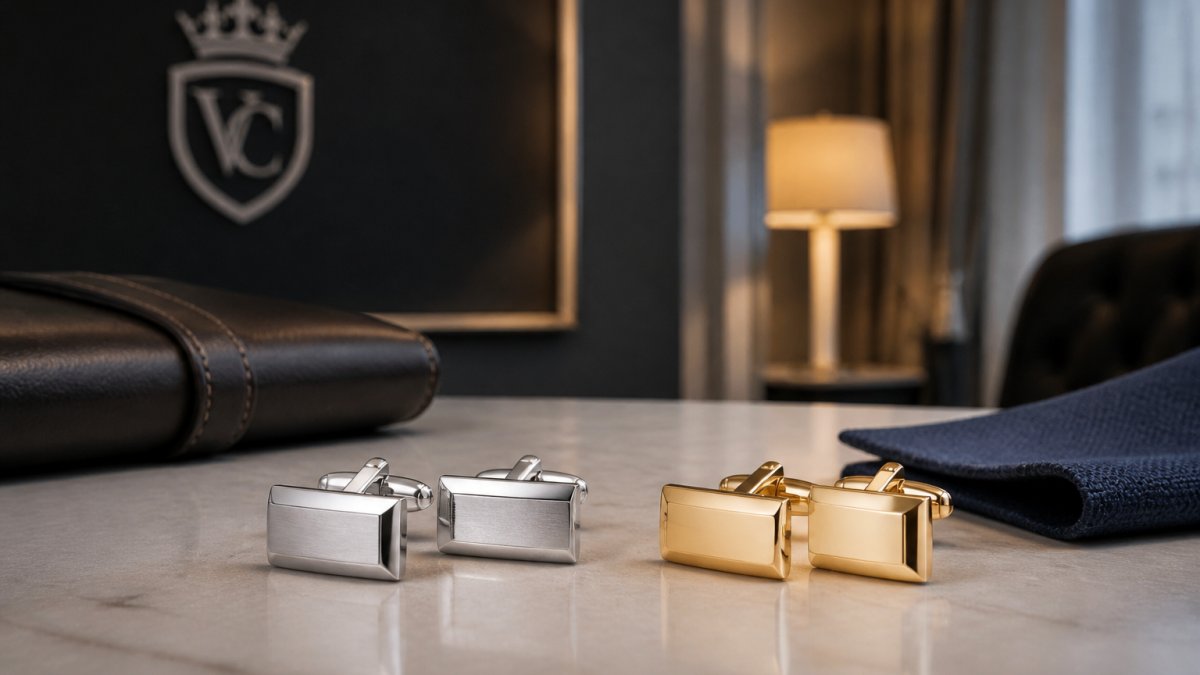
Gold plating over sterling silver adds warmth and visual richness, catching light more dramatically than polished silver. Gold-plated cufflinks work particularly well with warm-toned suits and ties.
The distinction is largely aesthetic: both are professional. Silver reads as classic and understated; gold reads as warmer and more confident. Neither is objectively superior.
Vermeil Construction and Durability
Vermeil is sterling silver coated with a thicker layer of gold plating than standard gold-plated silver, offering the durability of sterling silver with the visual warmth of gold.
Vermeil cufflinks last longer than standard gold plating because the gold layer is thicker, resisting tarnishing and scratching better than pure silver or thin gold-plated pieces.
For cufflinks you plan to wear regularly in formal settings, vermeil is worth the investment: the added durability maintains their appearance through years of use.
French Cuff Shirt with Suit: Complete Outfit Coordination
Wearing cufflinks for business formal attire requires coordinating all visible elements. A French cuff shirt with cufflinks is a statement, it needs to land correctly.
Matching Cufflinks with Dress Shirts and Suits
The cufflinks should complement, not match, your suit and shirt. A common mistake is trying to match them exactly. Instead, think about tonal relationships.
If your suit is navy and your shirt is white, silver cufflinks disappear into formality. Gold-plated or vermeil cufflinks add visual interest without clashing.
The rule is simple: cufflinks should be visible. They sit at the wrist, noticed during handshakes and conversations, so choose a finish that contrasts slightly with your shirt while harmonizing with your suit's tone.
Color, Tie, and Accessory Pairing
Your tie, pocket square (if worn), and cufflinks should create a coordinated look without matching exactly.
Avoid cufflinks that clash with your tie: if your tie is patterned, keep cufflinks simple and solid; if solid, they can be slightly more decorative.
The wrist is the final detail people notice. A coordinated cuff, French cuff shirt, well-chosen cufflinks, visible watch, and tailored jacket signal that you've thought through your appearance.
Three Essential Cufflink Styles for Business Formal Occasions
Not all cufflinks are created equal for formal business settings. The best styles communicate authority without demanding attention.
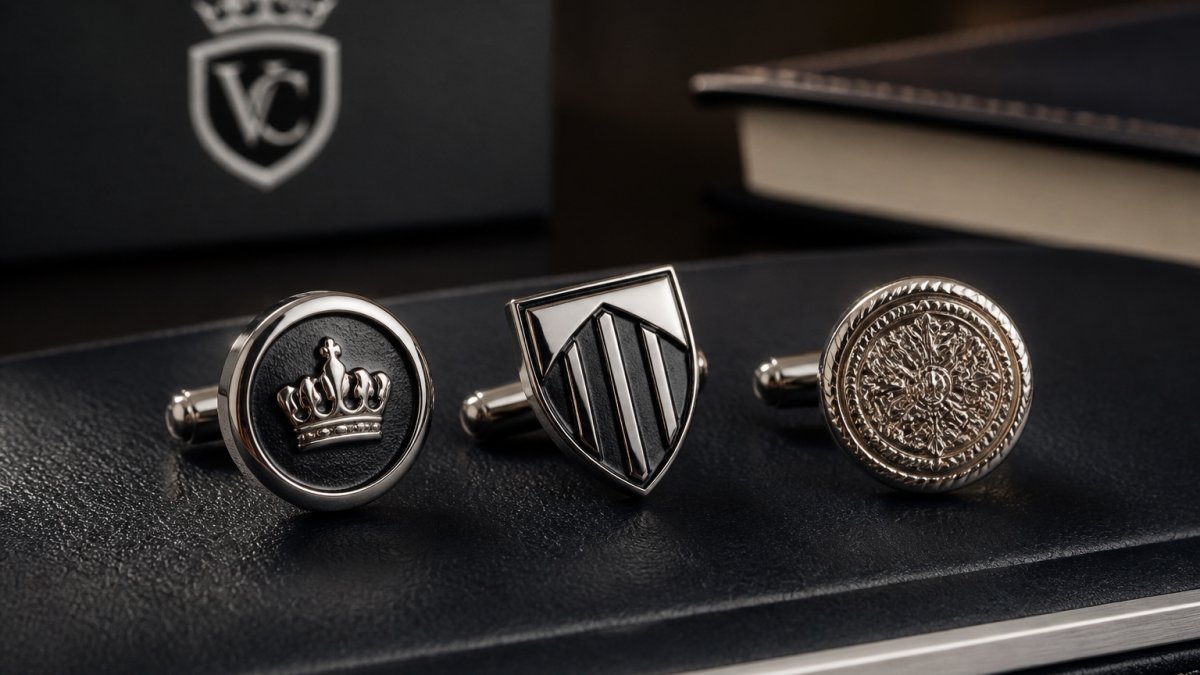
Executive Crown Cufflinks: Signature Authority
The crown design is the most recognizable symbol of leadership in menswear, signaling discipline and self-mastery without being ostentatious.
The Executive Crown Cufflinks from VALCREST™ feature the brand's signature crown, a refined interpretation of authority and personal standards.
These cufflinks work in any formal business setting: boardrooms, client meetings, formal dinners. They pair well with navy, charcoal, and black suits, and the whale back closure is reliable and easy to fasten.
Founder's Edition Shield Cufflinks: Limited Distinction
The shield is an architectural statement, conveying stability, achievement, and exclusivity without the obvious symbolism of a crown.
The Founder's Edition Shield Cufflinks are produced in limited quantities, making them a collector's piece.
What sets these apart is their exclusivity: each pair is individually numbered on the back, marking them as part of a limited edition.
At $329.00, these are a premium choice for collectors and men in leadership positions, the kind of cufflinks you pass down.
Heritage British Shilling Cufflinks: Timeless Character
Using authentic vintage British shillings as the face of a cufflink is a statement about history and craftsmanship. Each pair is unique because each coin has its own character.
The Heritage British Shilling Cufflinks from VALCREST™ mount genuine vintage silver coins in a custom bezel with a fixed-post backing.
The appeal is historical: a British shilling worn as a cufflink connects you to heritage and tradition.
Cufflink Etiquette and Workplace Appropriateness
Wearing cufflinks is a statement about understanding context and respecting occasion. Get it right, and people notice your polish. Get it wrong, and you signal tone-deafness.
Classic and Understated Styles That Command Respect
The best cufflinks for business formal attire are those you barely notice until you look for them.
Avoid novelty cufflinks in formal business settings: cartoon characters, joke designs, and overly playful aesthetics undermine authority. Save those for casual settings.
Size is important: cufflinks that are too large read as costume jewelry, while those too small disappear. A 16-20mm face diameter is the professional standard, noticeable without being theatrical.
What to Avoid: Common Mistakes in Formal Settings
The most common mistake is wearing novelty or casual cufflinks to a formal event.
Another error is pairing cufflinks with barrel cuff shirts: while technically possible, it creates an awkward fit.
Don't wear damaged or tarnished cufflinks to a formal event; lost shine or visible wear suggests carelessness.
Avoid mixing metals: silver and gold cufflinks worn simultaneously read as confused.
Finally, don't wear cufflinks where the dress code is business casual or lower; it signals misunderstanding the environment or trying too hard.
Cufflinks for business formal attire are more than accessories, they're declarations of intentionality. VALCREST™ offers three essential styles, the Executive Crown, the Founder's Edition Shield, and the Heritage British Shilling, each crafted from sterling silver and vermeil to endure for generations. Shop the Collection and invest in accessories that reflect your standards.

| Cufflink Style | Material | Finish | Diameter | Best For | Price |
|---|---|---|---|---|---|
| Executive Crown | Sterling Silver | Polished / 18k Gold Plating | 16mm | Boardrooms, client meetings, formal dinners | $229.00 |
| Founder's Edition Shield | Sterling Silver | 18k Vermeil Plating | 16mm | Executives, founders, collectors | $329.00 |
| Heritage British Shilling | Sterling Silver | 18k Gold Vermeil | 26mm | Formal events, weddings, heritage appreciation | $249.00 |
Frequently Asked Questions
Are cufflinks appropriate for business formal attire?
Yes. Cufflinks are not only appropriate but expected in business formal settings. They signal attention to detail and respect for the occasion. Wear them with French cuff dress shirts paired with tailored suits for client meetings, formal dinners, and professional events. In business professional environments, cufflinks elevate your appearance without being required. Business casual typically does not call for them, though context matters, a promotion celebration or important presentation may warrant their inclusion regardless of baseline dress code.
What's the difference between French cuff and barrel cuff shirts, and which works with cufflinks?
French cuff shirts have two layers of fabric that fold back, creating a wide opening designed specifically for cufflinks. Barrel cuff shirts have a single layer with buttons. French cuff shirts are designed for cufflinks. When wearing a French cuff shirt with suit and cufflinks, ensure the cuff sits just above your wristbone so the cufflinks remain visible, this is the standard for business formal attire. Barrel cuff shirts require traditional buttons and cannot accommodate cufflinks.
How do I choose the right cufflinks for a job interview?
For a job interview, select understated, classic cufflinks in sterling silver or gold that complement your suit without drawing excessive attention. Avoid novelty designs, bold colors, or statement pieces. The Executive Crown Cufflinks ($229) work well because their refined design signals discipline and professionalism without distraction. Ensure they match your watch and tie in metal tone. Size matters too: 16mm face diameter is standard and professional. The goal is to demonstrate that you respect the opportunity and understand professional norms.
Should cufflinks match my tie or watch?
Cufflinks should coordinate with your overall look rather than match exactly. If your watch has a gold tone, choose gold-plated cufflinks; if silver, select polished sterling silver. Your tie and cufflinks don't need to match, but they should complement each other in metal tone and formality level. A polished silver cufflink pairs well with most ties. Avoid mixing metal finishes, wearing gold cufflinks with a silver watch creates visual discord. The principle is cohesion across your accessories, not identical matching.
How do I know if cufflinks will hold up with regular wear?
Quality cufflinks are crafted from sterling silver with durable closure mechanisms like whale back or fixed post designs. VALCREST cufflinks use sterling silver with 18k gold or vermeil plating, materials that resist tarnishing and bending. Vermeil (sterling silver with gold plating) provides a protective layer that extends longevity. Proper storage in a dedicated box and occasional polishing preserve finish and function. Well-made cufflinks from established makers are designed to last decades, many become heirlooms passed between generations.