
How to Choose Collectible Cufflinks: A Buyer's Guide
Quick Summary
Choose collectible cufflinks by checking their materials, maker's marks, period, closure and condition before buying. A collectible pair has a reason to be kept, such as a documented maker, solid metal, and original parts that have survived well.
- Check metal stamps such as "925" or "14K" and verify any maker's mark before paying.
- Ask the seller for close photos of the back of each face and the closure.
- Solid precious metal sets a value floor, while plated pieces trade on design and maker.
- Replaced backs, re-plating and heavy polishing can significantly lower a piece's collectible value.
- Price a pair from three to five recent comparable sales, not from asking prices.
Table of Contents
- What Makes Cufflinks Collectible Rather Than Just Decorative
- How to Tell If Cufflinks Are Valuable Before You Pay
- Identifying Vintage Cufflinks by Period, Style and Construction
- Are Vintage Cufflinks Worth Money? How Collectible Value Is Determined
- Condition Grading, Restoration Risks and Authentication Checks
- Double Sided Cufflinks: Design Options and What to Check
- Your Next Step: Building a Starter Collection on a Budget
- Frequently Asked Questions
What Makes Cufflinks Collectible Rather Than Just Decorative
Collectible cufflinks are pieces that hold value because of their materials, maker, age, or condition, not just how they look on a shirt cuff.
Collectibility usually comes from a few things working together. The metal and any marks on it matter.
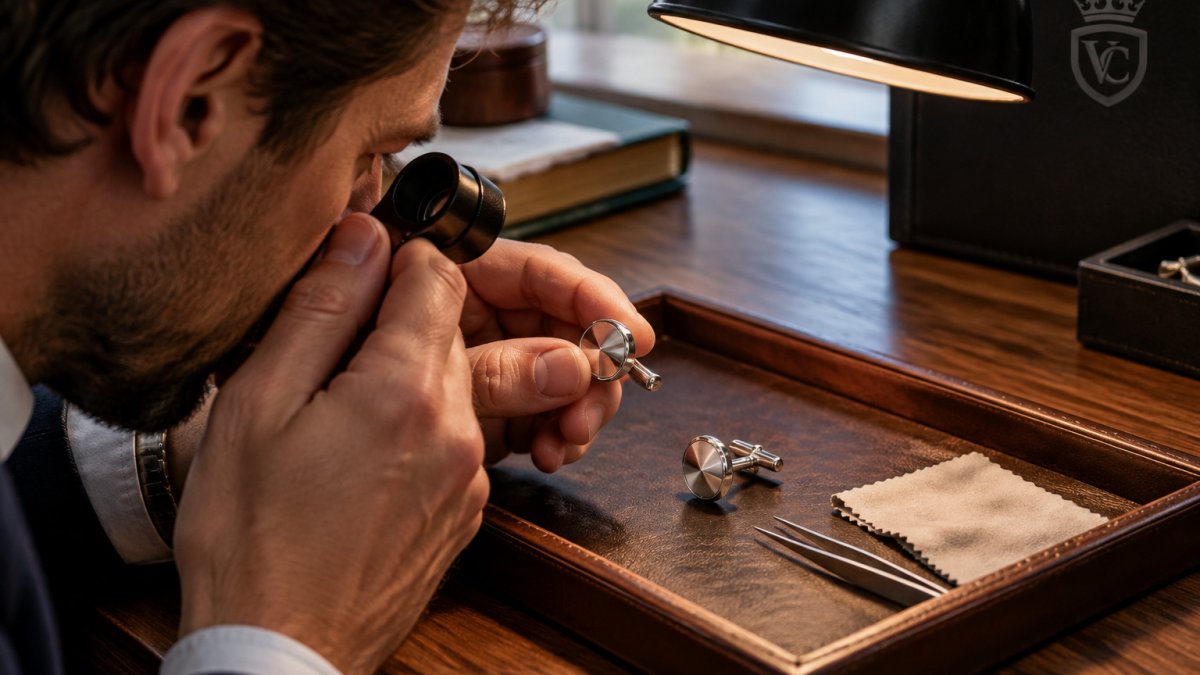
Many buyers start with decorative pieces and move toward collectible ones over time. A useful test: would you want to look closely at the piece under a loupe?
Materials, mechanisms and the closures that matter
Materials and mechanisms shape both wear and value. Sterling silver and gold-filled or vermeil finishes are common in quality menswear, and each behaves differently over time. Because a worn finish can obscure the workmanship beneath it, identifying handcrafted jewelry quality also means looking closely at construction and detail.
The closure also matters. Common types include:
- Whale-back (also called bullet-back): a sturdy, widely used closure that holds well in dress shirt cuffs
- Fixed-back: a rigid post that is secure but less flexible through the buttonhole
- Chain-link: a flexible connector that drapes naturally but needs more care to keep aligned
Check that the closure works smoothly and does not bend or loosen. A broken or replaced closure can lower a piece's value.
How to Tell If Cufflinks Are Valuable Before You Pay
Before you buy, look for signs that a pair has real worth. The most reliable starting points are the metal stamps and the maker's mark.
Ask the seller for close photos of the back of each face and the closure. Good sellers will provide them. If they refuse or only show the front, treat that as a warning.
Look for these checks before paying:
- A clear metal stamp such as "925" for sterling silver
- A maker's mark or name you can verify
- Consistent wear that matches the stated age
Reading hallmarks, karat stamps and maker's marks
Hallmarks and stamps are the fastest way to check a piece. Sterling silver is usually marked "925" or "STERLING." Gold is marked with a karat stamp such as "14K" or "18K." Vermeil or gold-filled pieces should be described accurately, since they are not solid gold.
Maker's marks identify who produced the piece. Look them up in a trusted reference before trusting the attribution. Be cautious of sellers who call a piece by a famous maker without any mark to support it.
Identifying Vintage Cufflinks by Period, Style and Construction
Vintage cufflinks can often be dated by their design, construction, and closure type.
Victorian and Edwardian pieces often feature ornate metalwork, engraving, or enamel.
Construction also tells a story. Hand-finished solder seams, hand-engraved details, and irregular edges often suggest older work.
Keep notes as you examine a piece. Record the closure type, metal marks, design motif, and any wear patterns.
Are Vintage Cufflinks Worth Money? How Collectible Value Is Determined
Vintage cufflinks are not automatically valuable, and the single most common mistake new collectors make is assuming age equals money. A pair from the 1930s can be worth less than a well-made contemporary piece if the maker is unknown, the metal is base, and the design is common. Value is a composite, and understanding how the parts interact is what separates a collector from a shopper.
The main drivers, roughly in order of how much they move a price:
- Maker and provenance: A documented maker, a recognized studio jeweler, a known costume-jewelry house, or a signed piece from a specific period, can multiply value several times over an identical unsigned piece. Provenance (an original box, a receipt, a catalog page, a family history) strengthens the attribution and the price.
- Materials: Solid precious metal carries melt-value floor that plated pieces do not. Sterling silver, 14K and 18K gold, and platinum set the base. Gold-filled and vermeil pieces trade on design and maker, not metal content, and their value drops sharply once plating wears through.
- Rarity: Limited production, discontinued designs, uncommon motifs, and unusual mechanisms (early spring-loaded backs, patented closures) attract collector premiums. Common mid-century geometric designs are plentiful and priced accordingly.
How comparable sales actually work
Collectors do not price from retail tags. They price from what similar pieces have actually sold for. The practical method is to find three to five recent sales of the same maker, period, and material in similar condition, then adjust for differences.
A useful discipline: write down the comparable sales you found, the date, and the condition notes before you make an offer. If you cannot find comparables, you are speculating, and you should price accordingly.
Realistic resale expectations
A pair bought at retail rarely resells for what you paid, since dealers buying for inventory need room to resell.
Watch out: A seller who quotes a high "appraised value" or an insurance replacement figure as if it were a resale price is conflating two different numbers, insurance value reflects replacement cost, not what a buyer will pay.
Heritage British Shilling Cufflinks →
For a broader look at what collectors prioritize in antique objects, see Smithsonian guidance on collecting antique objects.
The article lists the main drivers of collectible cufflink value, in rough order of how much they move a price.
| Value driver | Effect on price | Key point |
|---|---|---|
| Maker and provenance | Can multiply value several times | Original box, receipt or catalog page strengthens it |
| Materials | Solid metal sets a melt-value floor | Plated pieces trade on design and maker |
| Rarity | Attracts collector premiums | Common mid-century designs are plentiful |
| Condition | Protects value when original | Re-plating and replaced backs erode it |
| Demand | Drives steady or cyclical interest | Art Deco and novelty motifs have followings |
Condition Grading, Restoration Risks and Authentication Checks
Condition is one of the most important factors in collectible value, and it is the area where beginners most often get burned. A pair can look fine in photos and still be a poor collectible because of a replaced back, a re-plated face, or a stone that was glued rather than set. Grading and authentication are learned skills, but a disciplined inspection catches most problems.
A practical condition grading scale
Collectors and dealers generally describe condition in tiers rather than precise scores. A workable scale for cufflinks:
- Excellent: Original finish, no visible wear beyond faint surface marks, all stones and enamel intact, closures original and smooth, no repairs.
- Very good: Light wear consistent with age, minor surface scratches, original components, no structural issues.
- Good: Noticeable wear, some finish loss on plated pieces, minor dings, but structurally sound and all parts present.
Grade each cufflink separately, pairs are often mismatched in condition, and a single replaced back changes the grade for the pair.
Authentication: what to check and in what order
Authentication is a sequence, not a single glance. Work through it in this order:
- Marks and stamps: Confirm the metal stamp ("925," "STERLING," "14K," "18K") and the maker's mark are crisp, correctly placed, and consistent with the stated origin. Reproductions often have soft, blurry, or wrongly placed marks.
- Construction details: Examine solder joints, the join between face and post, and the closure mechanism. Hand-finished work shows slight irregularity; perfectly uniform stamping and seams can indicate later production.
- Wear patterns: Genuine age produces wear in predictable places, the edges of the face, the post where it passes through the cuff, the closure hinge. Uniform, artificial distressing is a red flag.
- Components: Check that the closure is original to the piece. Replaced backs are common and should be disclosed; an undisclosed replacement is a warning about the seller.
- Documentation: Ask for provenance, original box, receipt, catalog page, or family history. Documentation strengthens attribution and is hard to fake convincingly.
A professional appraiser or a jeweler experienced in antiques can examine stamps, construction, and wear under magnification. Get an independent opinion before paying significant money, and never rely solely on the seller's description.
Restoration risks and what they do to value
Restoration can hide problems or reduce value, and the trade-offs are specific:
- Re-plating: Restores appearance on vermeil and gold-filled pieces but erases the original finish and wear that collectors use to judge age. On collectible pieces, re-plating often lowers value even though the piece looks better.
- Replaced posts or backs: A functional repair, but a non-original component on a collectible piece is a permanent value discount and should be priced in.
- Re-soldered joints: Can be done well, but visible solder, discoloration, or misalignment signals a repair that affects grade.
Ask the seller directly whether any work has been done, and get the answer in writing. A seller who will not answer or who dismisses the question is telling you something.
For guidance on working with an independent appraiser, see American Society of Appraisers appraiser directory.
!Close-up of a collector's hands under a desk lamp examining a pair of silver cufflinks with a jeweler's loupe on a leather tray
Double Sided Cufflinks: Design Options and What to Check
Double-sided cufflinks show a design on both faces, which suits shirts where both sides are visible. They are popular for formal events and gifts because they look finished from any angle.
Check the join between the two faces carefully. A well-made pair has a clean, secure connection with no gaps or loose edges. Also confirm that the closure sits securely through both sides of the cuff.
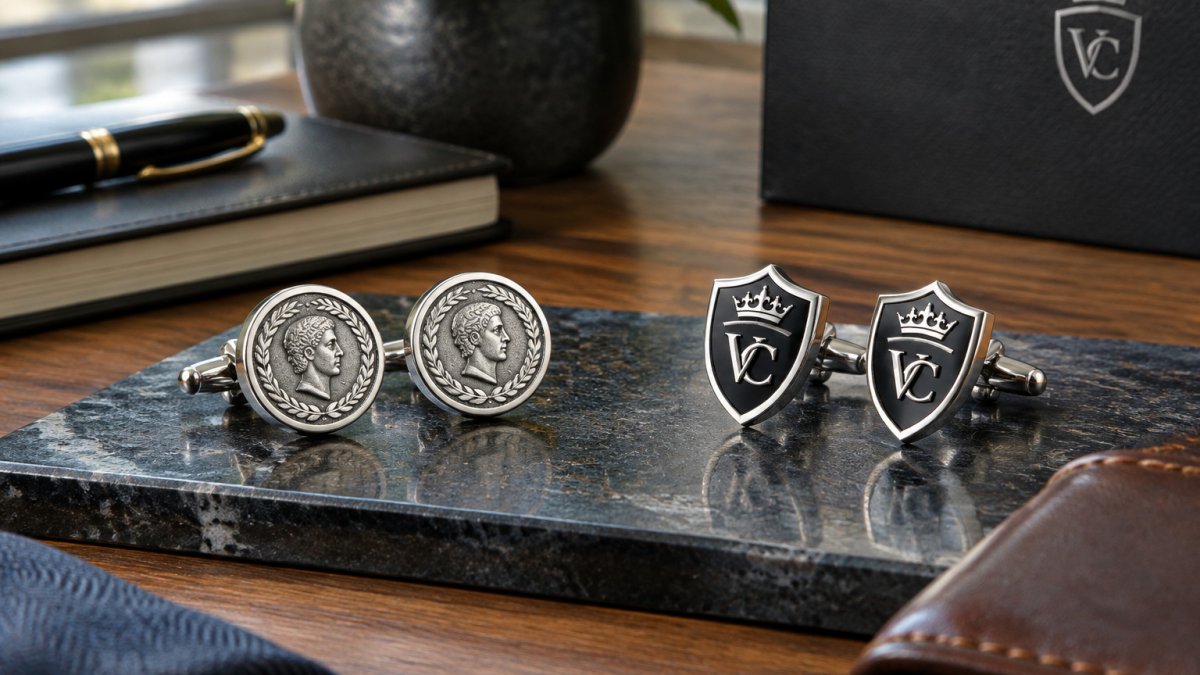
Design options vary widely. The VALCREST™ Founder's Edition Shield Cufflinks, for example, use an architectural shield design in sterling silver with 18k gold vermeil, and each piece is individually numbered on the back.

Your Next Step: Building a Starter Collection on a Budget
Start small and focus on quality over quantity. A few well-made pieces will hold their value and interest better than a large drawer of unremarkable pairs.
At VALCREST™, we suggest beginning with one or two pieces that suit your daily shirts and occasions. A good starting point is the [Heritage British Shilling Cufflinks | valcrestcollection.com], which feature authentic vintage silver British shillings mounted in sterling silver bezels with an 18k gold vermeil finish, priced at $249.00.

As your collection grows, check each addition against the criteria above: materials, stamps, closure, and condition. Store pieces separately to prevent scratching, and keep your notes and documentation together. Over time, these habits will help you build a collection worth keeping.
Frequently Asked Questions
How can you tell if cufflinks are valuable?
Start with the metal. Look for a karat stamp, a fineness mark such as 925 for sterling silver, or a maker's mark. Check the backs, posts and closures for consistent hallmarks, since replacement parts often show mismatched stamping. Then assess condition and provenance. Dealers and auction houses weigh maker reputation, design rarity and intact original parts more heavily than the weight of the metal alone. Pieces with no marks are not automatically worthless, but they are harder to price and should be bought at a lower figure.
Are vintage cufflinks worth any money?
Some are, and many are not. Most everyday vintage pairs in plated metal sell for modest amounts, while signed pieces from known makers, well-preserved Art Deco or Victorian examples, and pairs with gemstones or enamel can command significantly more. Value depends on rarity, maker, condition and demand at the time of sale. Compare recent sold listings rather than asking prices to get a realistic sense of what a pair is worth before you buy or sell.
How can you identify vintage cufflinks?
Begin with the closure. Whale-back and bullet-back fittings, toggle bars and chain-link designs were used in different periods, and their construction reveals a good deal about age. Examine solder joints, the patina on the back and the style of the front motif. Victorian, Art Deco and Mid-Century pieces each have recognizable design language. If the details are unclear, a jeweler or appraiser can confirm the period and whether parts are original.
Are gold cufflinks more valuable than sterling silver cufflinks?
Solid gold generally carries more intrinsic value than sterling silver because of the metal itself, but collectible value depends on maker, design and condition. A well-made sterling silver pair by a recognized maker can outvalue a plain gold-filled or plated pair. Vermeil, which is sterling silver with a gold layer, sits between the two in material value. Check the karat or fineness mark to confirm exactly what you are buying.