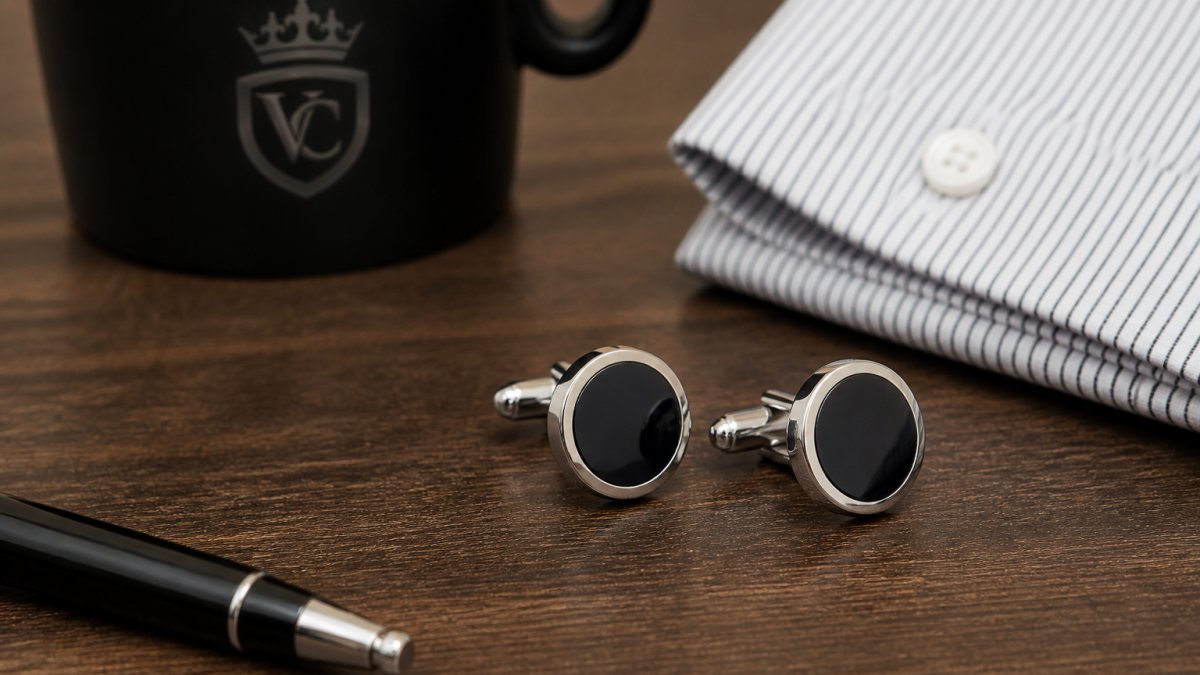
Article: How to Style Cufflinks With Suits: A Complete Guide
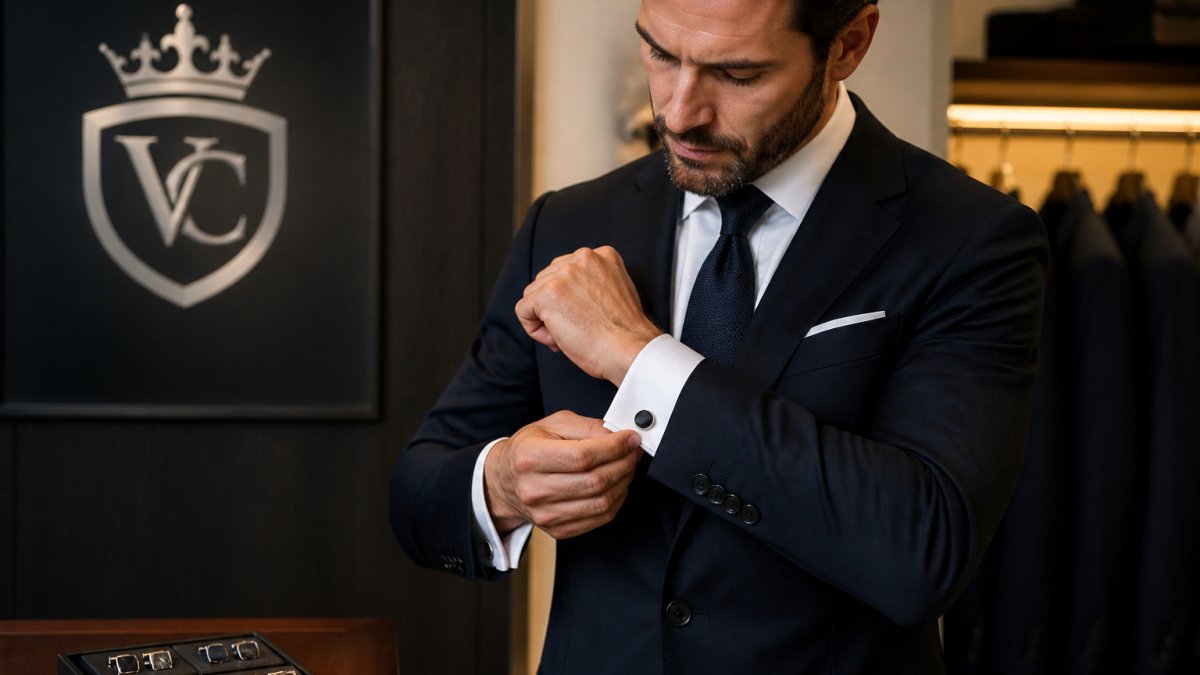
How to Style Cufflinks With Suits: A Complete Guide
Table of Contents
- Understanding Cufflinks and Cuff Types
- How to Put Cufflinks in a Shirt
- How to Match Cufflinks With a Suit
- How to Wear Cufflinks With a French Cuff Shirt
- When to Wear Cufflinks: Occasion-Specific Guidance
- Styling Cufflinks by Suit Color and Occasion
- Common Mistakes and Dress-Code Pitfalls
- Frequently Asked Questions
Last Updated: October 16, 2026
Understanding Cufflinks and Cuff Types
Cufflinks are small fasteners that secure dress shirt cuffs, serving both function and aesthetics. Understanding cuff styles is essential before you can properly style cufflinks with suits.
French cuffs fold back and require cufflinks; button cuffs have pre-sewn buttons and work independently. Knowing which type you own determines how you'll wear your cufflinks.
Cuff style also affects visual impact: French cuffs create a more formal, deliberate appearance, which matters when matching cufflinks to occasions or suit styles.
French Cuffs and Double Cuffs
French cuffs fold back on themselves, creating a double layer of fabric (hence "double cuff"). They are designed exclusively for cufflinks and cannot be fastened any other way.
French cuffs typically measure 1.5 to 2 inches wide. Folded, they create a rectangular opening with two holes per side, displaying your cufflinks as a central element of your formal look.
Their formality makes French cuffs ideal for black-tie events, business galas, and significant professional occasions.
Convertible Cuffs and Button Cuffs
Convertible cuffs fasten with either cufflinks or buttons, featuring both hole types for flexibility by occasion or preference.
Button cuffs are the most common type: a single layer with buttons sewn in. They suit business casual and semi-formal settings but don't accommodate cufflinks.
Knowing your cuff type prevents mistakes: you cannot force cufflinks onto button cuffs, and convertible cuffs require proper hole alignment.
How to Put Cufflinks in a Shirt
Putting on cufflinks becomes intuitive once you understand the mechanics: secure fastening without damaging your shirt or the cufflinks.
Fold your French cuff back so the two holes align and face outward. Hold the cuff steady and guide the cufflink through both holes.
Insert the post through both holes from the outside and push gently until the mechanism engages with a subtle click. Test by tugging gently; the cuff should not slide or rotate.
Aligning Cufflink Holes and Cuff Edges
Proper alignment is critical: misaligned cufflinks look sloppy and may not hold. Cuff edges should meet evenly, with both holes aligned vertically.
Before inserting the cufflink, check the folded cuff from the side: the two layers should be flush. If one extends beyond the other, refold carefully, since slight misalignment becomes obvious once the cufflink is in.
When aligned, the cufflink face should sit perpendicular to your wrist so the design faces outward. Misalignment tilts the cufflink, undermining the polished effect.
Fastening Methods: Whale Back and Fixed Post
Two fastening mechanisms secure cufflinks: the whale back and the fixed post.
Whale back cufflinks have a curved backing that swings open: insert the post through the cuff holes, then swing the back down to lock it.
Fixed-post cufflinks are one solid piece with a permanent backing.
VALCREST™ Executive Crown Cufflinks feature whale back closures for security and ease of use, while the Founder's Edition Shield Cufflinks use fixed-post fastening for a seamless look.

How to Match Cufflinks With a Suit
Styling cufflinks with suits requires understanding how metal tones, suit fabrics, and outfit harmony work together. The goal is cohesion: cufflinks should enhance your suit, not distract from it.
The fundamental rule: cufflinks should complement, not match exactly. Matching every metal tone creates visual chaos, so choose cufflinks that harmonize with your suit's undertones or provide intentional contrast.
Metal Tones and Suit Fabric
Silver and white metal cufflinks pair beautifully with charcoal, navy, and gray suits, aligning with their cool undertones for a refined, understated look.
Gold and warm metal cufflinks work best with lighter suits, camel blazers, and warmer-toned fabrics, adding warmth to summer suits or tan business wear.
Consider fabric finish: matte suiting pairs well with polished cufflinks for contrast, high-luster fabrics benefit from refined finishes, and textured suiting works with solid, understated cufflinks to avoid visual overload.
Coordinating With Ties and Accessories
Your cufflinks should coordinate with your tie, watch, and belt buckle without matching exactly. Think of accessories as a visual conversation, not a matching set.
If your tie has metallic threads, echo one of those tones subtly: a navy tie with silver pinstripes pairs with silver cufflinks, while a burgundy tie with gold accents works with gold or gold-vermeil.
Your watch band matters too: leather works with any cufflink metal tone, while a metal band should complement rather than match.
How to Wear Cufflinks With a French Cuff Shirt
French cuff shirts demand a specific approach: the cuff's visibility makes your cufflinks a focal point and an opportunity to express intentionality.
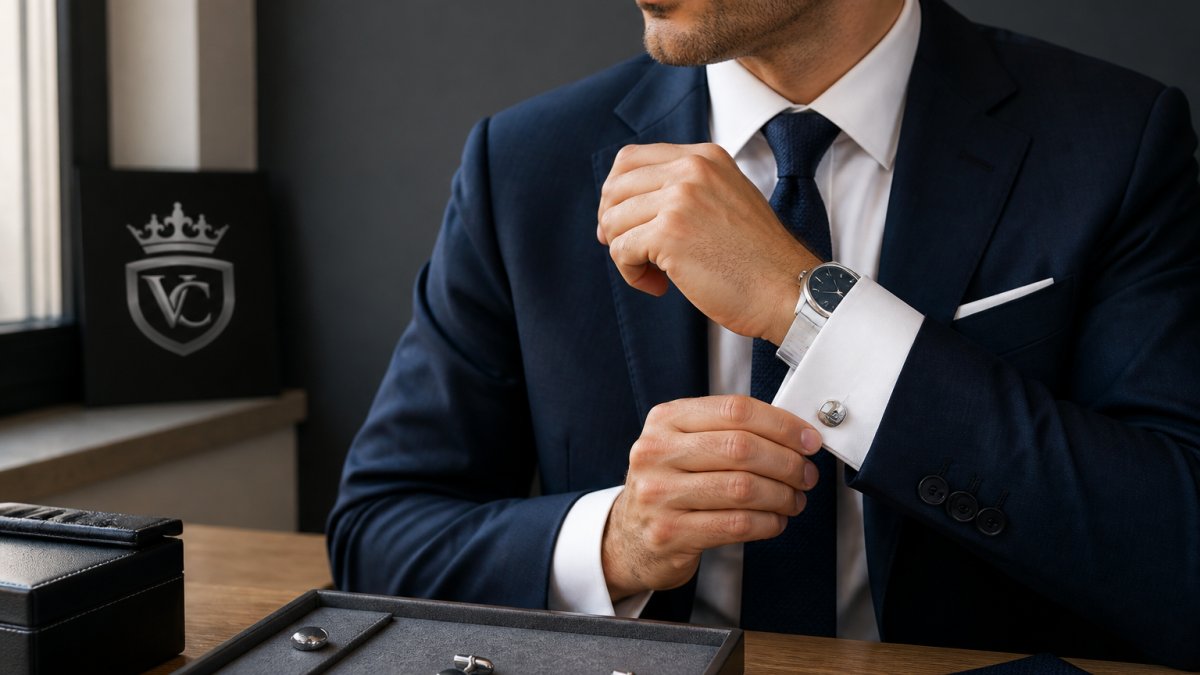
French cuffs extend further down your wrist than button cuffs, creating a larger canvas. Sitting between watch and hand, they're highly visible when you gesture or shake hands, so choose thoughtfully.
Kissing or Folding Cuff Edges
"Kissing cuffs" refers to how French cuff edges come together when folded. Proper technique creates a neat, intentional appearance; sloppy folding undermines even the finest cufflinks.
To achieve the kissing cuff look, fold the cuff back so the edges meet perfectly, layers flush with no gaps or overlaps, creating a clean rectangular opening where edges touch lightly.
Some prefer a slightly looser fold where edges don't quite meet. That's acceptable if intentional and consistent; avoid folding so loosely that cuffs appear careless.
Cufflink Face Direction and Visibility
Your cufflink face should point outward so the design is visible, signaling confidence and intentionality. When you extend your hand for a handshake, your cufflinks should show.
Position matters: a cufflink too far up the wrist hides under your jacket sleeve. Set it roughly one-quarter inch below the jacket cuff edge for visibility without awkward protrusion.
Executive Crown Sterling Silver Cufflinks →
Test by extending your arm naturally: cufflinks should be visible at rest and clearly visible when raised. This balance separates polished styling from ostentation.
When to Wear Cufflinks: Occasion-Specific Guidance
Cufflinks aren't appropriate for every setting. Knowing when to wear them demonstrates social awareness and respect for dress codes, which determine whether they're necessary, optional, or inappropriate.
Formal Events and Black-Tie Occasions
Black-tie events demand cufflinks, since the dress code requires French cuff shirts that cannot be fastened without them. With tuxedos and formal dinner jackets, they're non-negotiable.
For black-tie, choose elegant, classic silver or gold cufflinks and avoid novelty or oversized designs. The goal is to look refined, not to make a statement.
White-tie events represent the highest formality level and require the most conservative choices: understated silver or pearl cufflinks are traditional, keeping focus on your overall appearance.
Semi-Formal Settings and Business Attire
Semi-formal occasions like cocktail parties, galas, and formal dinners often call for cufflinks but don't mandate them.
Business settings rarely require cufflinks unless it's a formal corporate event or client dinner; business casual doesn't call for them at all.
This distinction prevents appearing underdressed or overdressed: cufflinks at a business casual meeting signal unfamiliarity with dress codes, while skipping them at a black-tie event marks you as inattentive.
Styling Cufflinks by Suit Color and Occasion
Different suit colors call for different cufflink approaches; the relationship between suit color and metal tone determines your harmony.
Navy and Charcoal Suits
Navy suits are the most versatile, pairing beautifully with silver cufflinks for a classic, timeless look. Silver complements navy's cool undertones across formal and business settings, feeling authoritative and refined.
Gold or gold-vermeil cufflinks with navy create warmth and personality, working especially well for evening events. The contrast between cool navy and warm gold adds visual interest.
Charcoal works similarly: silver cufflinks create a monochromatic, sophisticated look with aligned cool tones, while gold feels warmer but still professional. Charcoal's neutrality forgives either metal tone.
Light Suits and Summer Fabrics
Light gray, tan, and cream suits benefit from warm metal cufflinks. Gold or gold-vermeil enhances these fabrics' natural warmth, feeling elegant for daytime formal events or summer galas.
Silver can work with light suits but may feel cold. If you prefer it, choose a brushed or satin finish rather than high-polish to soften the contrast.
Cream and ivory suits are rare but stunning when styled correctly. These ultra-light fabrics pair best with gold or warm-toned cufflinks, whose warmth prevents a washed-out look.
Complete Outfit Examples
Example 1: Navy Suit, Silver Cufflinks, Business Formal
- Navy three-piece suit with subtle texture
- Crisp white French cuff shirt
- Silver cufflinks with classic design (like VALCREST™ Executive Crown Cufflinks)
- Navy tie with subtle pattern
- Silver watch band or leather strap
- This combination projects authority and reliability.
Example 2: Charcoal Suit, Gold-Vermeil Cufflinks, Evening Event
- Charcoal suit with refined finish
- White or cream French cuff shirt
- Gold-vermeil cufflinks with architectural detail (like VALCREST™ Founder's Edition Shield Cufflinks)
- Burgundy or deep wine tie
- Leather watch strap
- This pairing feels sophisticated and memorable.
Example 3: Light Gray Suit, Silver Cufflinks, Daytime Formal

- Light gray suit in summer-weight fabric
- White French cuff shirt
- Silver cufflinks with understated elegance
- Light blue or silver-gray tie
- This look feels fresh and refined for afternoon events.
Common Mistakes and Dress-Code Pitfalls
Even small errors in cufflink styling undermine your appearance. Understanding common mistakes helps you avoid them.
Scale, Fit, and Visibility Issues
Oversized cufflinks are a frequent mistake. Cufflinks should be visible but not dominate; anything larger than one inch in diameter becomes a distraction.
Misaligned cuff folding looks immediately sloppy: when French cuff edges don't meet evenly, cufflinks sit crooked, signaling carelessness regardless of price.
Hidden cufflinks sit too far up your wrist under the jacket sleeve.
Loose or rattling cufflinks suggest poor maintenance or low-quality construction. Your cufflinks should be secure and silent. If they rattle or shift, check the fastening mechanism.
Mismatched Metals and Clashing Styles
Mixing too many metal tones creates visual chaos. Your cufflinks, watch, belt buckle, and tie accents should form a coordinated system.
Pairing formal cufflinks with casual outfits appears pretentious. Ornate cufflinks at a business casual meeting signal poor judgment.
Wearing novelty or branded cufflinks in professional settings undermines credibility.
Styling cufflinks with suits is fundamentally about intentionality.
At VALCREST™, we believe cufflinks are more than fasteners: they're quiet declarations of personal standard.
The Gentleman's Journal guide to formal dress codes confirms that proper cufflink styling remains central to refined menswear. Whether you're attending a black-tie gala or an important business dinner, the way you style your cufflinks with your suit matters. Esquire's formal menswear styling guide reinforces that attention to accessory detail separates polished professionals from those who simply wear clothes.
Shop the VALCREST™ collection and invest in cufflinks built to last. For collectors of heritage craftsmanship, our Heritage British Shilling Cufflinks ($249.00) pair authentic vintage silver with custom sterling bezels.

Each piece is designed to endure and communicate the standards you hold for yourself.
Frequently Asked Questions
How do you properly put cufflinks in a shirt?
Insert both posts of the cufflink through the cuff holes, ensuring the holes align at the cuff edge. For French cuffs, fold the cuff back on itself so the holes line up perfectly. Secure the backing (whale back or fixed post) on the underside. The cufflink face should sit flush against the folded fabric, with the emblem or design facing outward for visibility. Practice the motion a few times to develop a smooth fastening technique.
When should you wear cufflinks with a suit?
Wear cufflinks for formal events, black-tie occasions, and semi-formal business settings where you want to project authority and refinement. They're appropriate for weddings, galas, important client meetings, and professional milestone celebrations. Business casual environments may not call for cufflinks unless your workplace culture emphasizes formal dress. If your company dress code is minimal, cufflinks signal personal discipline and elevated standards even when not required.
How do you match cufflinks with a suit and tie?
Choose cufflink metal tones that complement your suit fabric and tie color. Silver cufflinks work universally with charcoal, navy, and light suits, while gold or vermeil accents add warmth to darker fabrics. Coordinate the cufflink design with your tie pattern: keep both subtle for conservative settings, or pair a bold cufflink with a solid tie. Ensure your cufflinks, watch, and belt buckle use the same metal tone for a polished, balanced appearance.
Can you wear cufflinks with a regular button-cuff shirt?
No. Cufflinks require French cuffs, double cuffs, or convertible cuffs with two buttonholes aligned at the edge. Button-cuff shirts have a single button closure and cannot accommodate cufflinks. If you want the flexibility to wear cufflinks occasionally, invest in convertible cuff shirts that feature both button options and cufflink holes, allowing you to switch between casual button wear and formal cufflink styling.