
Article: How to Compare Coin and Shield Cufflinks Side by Side
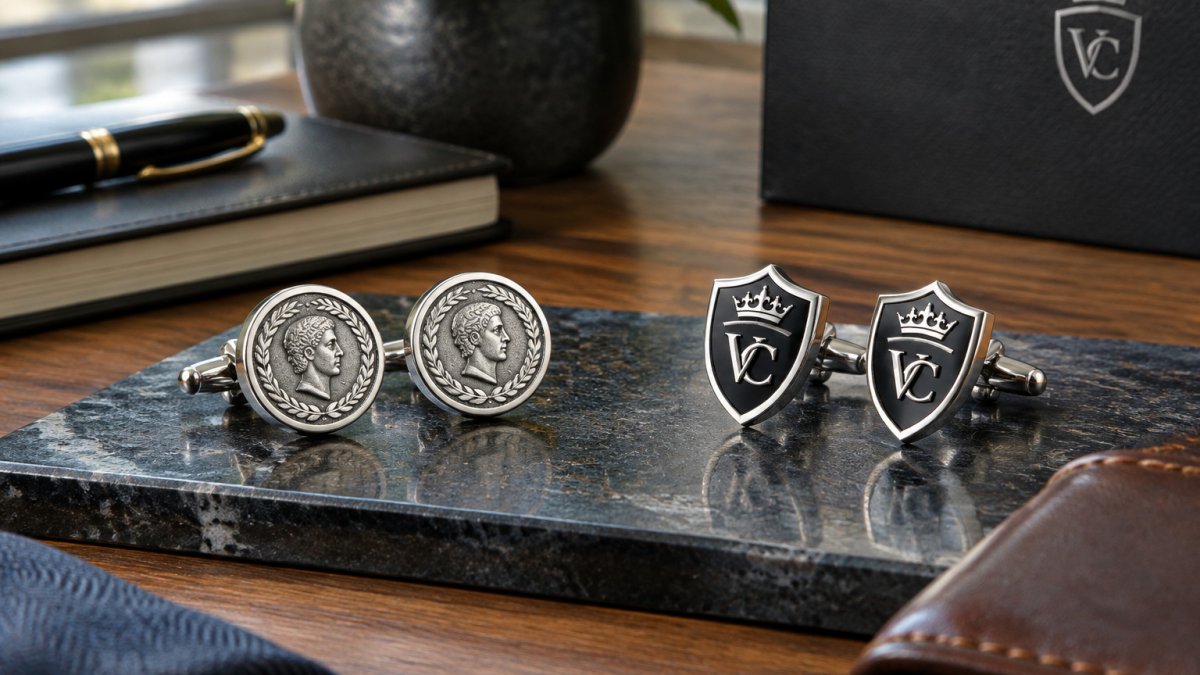
How to Compare Coin and Shield Cufflinks Side by Side
Quick Summary
Coin and shield cufflinks differ mainly in face shape, size and wear: coin cufflinks have a flat round face in a bezel, while shield cufflinks have an architectural shield face. Coin pieces suit heritage-minded formal wear, and shield pieces suit everyday, understated outfits.
- Coin cufflinks use a flat, round face, often a genuine coin in a metal bezel.
- Shield cufflinks have a flatter, architectural face in a shield or crest silhouette.
- The Heritage British Shilling Cufflinks have a 26mm face and weigh 16 grams per cufflink.
- The Founder's Edition Shield Cufflinks have a 16mm face and weigh 9 grams per cufflink.
- Choose a coin design for weddings and galas, and a shield or crown in sterling silver for daily wear.
Table of Contents
- Coin and Shield Cufflinks: Core Definitions and Terminology
- Types of Cufflinks: Where Coin and Shield Styles Fit
- Materials, Craftsmanship and Durability Compared
- Weight, Size and Comfort on the Cuff
- What Should Cufflinks Match: Shirts, Suits and Dress Codes
- How to Choose Between Coin and Shield Cufflinks
- Confirming a Vintage Coin Pair and Caring for Your Choice
- Frequently Asked Questions
Coin and Shield Cufflinks: Core Definitions and Terminology
Last Updated: November 5, 2026
Coin cufflinks feature a flat, round face, often made from a genuine coin mounted in a metal bezel. Shield cufflinks have a flatter, architectural face in a shield or crest silhouette. Both styles sit on a fastener at the back, and the choice between them usually comes down to design and the feel you want at the cuff.
Before comparing the two, it helps to understand the vocabulary. The face is the visible front of the cufflink. The backing is the mechanism that holds it through the shirt cuff, typically a fixed post, whale back or bullet back. A bezel is the metal rim that holds the face in place, and a vermeil finish is sterling silver plated with a thick layer of gold.
Several VALCREST™ pieces show these differences clearly. The Heritage British Shilling Cufflinks use authentic vintage silver shillings set in custom sterling silver bezels with an 18k gold vermeil finish. The Founder's Edition Shield Cufflinks use an architectural shield design, also in sterling silver with 18k gold vermeil. Knowing these terms makes product specifications easier to compare.

Types of Cufflinks: Where Coin and Shield Styles Fit
Coin and shield designs sit within a broader range of cufflink types. Coin styles lean toward heritage and numismatic interest, while shield styles suit a more modern or architectural look. Neither is inherently more formal than the other.
Coin cufflinks work well for men who want a conversation piece that carries a sense of history. Shield cufflinks suit those who want a clean, structured silhouette that reads as deliberate and restrained. Our Executive Crown Sterling Silver Cufflinks take a third route, using a signature crown design in polished sterling silver for a classic, understated look.

Materials, Craftsmanship and Durability Compared
Sterling silver is the base metal for most quality cufflinks because it is durable, takes detail well and polishes back to a bright finish. You can compare these construction details in our unique shield design cufflinks for men. Vermeil adds a gold surface over silver, in the pieces here, an 18k gold vermeil over sterling, which gives a warm tone at a lower cost than solid gold. Solid gold is heavier and more costly, and it is not a feature of the VALCREST™ pieces listed here.
Durability is where coin and shield designs genuinely diverge. Coin cufflinks carry two wear surfaces: the coin face and the bezel that holds it. The bezel protects the coin's edge, but the face is exposed to everyday contact.
A practical pattern most jewelers and collectors describe: coin pieces age visibly and develop patina, which many owners want; shield pieces age quietly and keep a uniform surface, which suits anyone who wants the pair to look the same in five years as it did on day one. Neither is more durable in absolute terms, they fail differently. Coin wear shows as softened detail and a duller field; shield wear shows as edge nicks and finish loss at the high points.
Finish matters as much as base metal. If you plan to wear the same pair several days a week, a sterling piece is a practical choice; if the pair comes out for weddings and galas, vermeil's warmth suits occasional wear.
Weight, Size and Comfort on the Cuff
Size and weight affect how a cufflink sits and feels on the cuff, and this is the comparison most guides leave out. The Heritage British Shilling Cufflinks have a 26mm face and weigh 16 grams per cufflink. The Founder's Edition Shield Cufflinks have a 16mm face and weigh 9 grams per cufflink. The Executive Crown Cufflinks have a 16mm face and weigh 10 grams per cufflink.
The difference is noticeable in the hand and on the wrist. A 26mm coin face is wide enough to cover most of the visible cuff opening, so the coin reads as the focal point of the sleeve; a 16mm shield sits within the cuff and reads as a detail rather than a statement. At 16 grams, the coin pair is roughly 70 percent heavier per cufflink than the 9-gram shield pair, and that mass changes how the cuff hangs.
Heritage British Shilling Cufflinks →
The article's specifications for the three named pieces are easier to compare at a glance:
| Cufflink | Face size | Weight per cufflink |
|---|---|---|
| Heritage British Shilling Cufflinks | 26mm | 16 grams |
| Founder's Edition Shield Cufflinks | 16mm | 9 grams |
| Executive Crown Cufflinks | 16mm | 10 grams |
What Should Cufflinks Match: Shirts, Suits and Dress Codes
Cufflinks should complement the rest of the outfit, not compete with it. A coin design in gold vermeil pairs well with a navy suit and a white shirt at a wedding or gala. A shield design in sterling silver suits a charcoal suit and a crisp spread-collar shirt for the office.

Dress code shapes the choice. Business casual settings call for smaller, understated pieces, while formal evening events allow more visible detail. Match metal tones across your watch, belt buckle and cufflinks where possible, so the accessories look intentional.
How to Choose Between Coin and Shield Cufflinks
Follow these steps to decide which style suits you:
- Define the occasion. List how often you will wear them and where. Formal events favor the bolder coin pieces, while daily office wear suits a shield.
- Pick a metal tone. Choose silver for a cool, understated look or gold vermeil for a warmer accent.
- Check the backing. Confirm the closure works with your shirt cuffs, whether fixed post or whale back.
- Compare size and weight. Heavier coins need sturdier cuffs. Lighter shields suit fine fabrics.
- Consider the story. A vintage coin carries history, while a shield design reflects a personal milestone.
Our recommendation: if you wear cufflinks mainly to weddings and galas, start with a coin design. If you wear them daily, choose a shield or crown in sterling silver.
Confirming a Vintage Coin Pair and Caring for Your Choice
Vintage coin cufflinks vary, so check each pair before buying. Each VALCREST™ Heritage British Shilling piece is uniquely numbered on the back, and no two pairs are alike.
Sterling silver and vermeil pieces are built to last generations, which makes them suitable as heirlooms.
Ready to choose your pair? Browse the VALCREST™ cufflink collection and find the style that fits your next occasion.
Frequently Asked Questions
What is the difference between coin and shield cufflinks?
Coin cufflinks feature a round face, often a vintage silver coin set in a decorative bezel, and they carry historical character. Shield cufflinks have an architectural, angular face with clean lines. The VALCREST Heritage British Shilling Cufflinks ($249.00) represent the coin style, with a 26mm face and 16 grams per cufflink, while the Founder's Edition Shield Cufflinks ($329.00) represent the shield style, with a 16mm face and 9 grams per cufflink. The choice comes down to whether you want history or architecture on your cuff.
Which cufflinks are more versatile: coin or shield?
Shield cufflinks are generally the more versatile choice for business settings because their lighter weight and understated architecture suit most dress codes. Coin cufflinks carry more visual weight and personality, which works well for weddings, galas and anniversaries. If you wear cufflinks mainly to the office, a compact shield pair is the safer everyday option. If you attend formal events more often and want a distinctive detail, a coin pair adds a noticeable accent.
How do I know if my cufflinks are worth money?
Check for hallmarks, metal content and any maker's marks on the back. VALCREST pieces are uniquely numbered on the back, which helps you identify a specific pair. For vintage coins, verify the coin's date, mint and silver content before assuming value. Keep original boxes and documentation, since they support provenance when you later sell or insure a pair.
What should cufflinks match?
Match cufflinks to your shirt collar and cuff style, your suit or jacket formality, and the metals you already wear, such as a watch or belt buckle. Fixed-post backings suit French cuffs, while many shirts work well with a whale back closure, such as the Executive Crown Sterling Silver Cufflinks ($229.00). For a business casual dress code, a restrained shield design in silver usually fits best. For black-tie or celebratory events, a coin pair with a warm gold accent can complete the look.


