
Can You Wear Cufflinks Without a Tie?
Quick Summary
Yes, you can wear cufflinks without a tie. An open-collar shirt with French cuffs and cufflinks is a well-established smart look, as long as the rest of the outfit matches its level of polish. The tie is optional, but the cuffs are not.
- Cufflinks belong on French-cuff shirts, which have double-layer cuffs with holes instead of buttons.
- Leave the top one or two buttons undone: one for a crisp business look, two for smart-casual.
- A structured blazer or suit jacket raises the formality of an open-collar French-cuff shirt.
- The cuff should sit about half an inch past the jacket sleeve so the cufflink shows when you move.
- If the invitation specifies black tie or white tie, treat the tie as required unless the host says otherwise.
Table of Contents
- Which Shirts Work With Cufflinks
- How to Wear French Cuffs Without a Tie
- Step-by-Step: Fastening Cufflinks on an Open-Collar Shirt
- Wearing Cufflinks Without a Jacket
- Choosing Occasion-Appropriate Cufflinks for an Open Collar
- Common Styling Mistakes and How to Fix Them
- Building Your Open-Collar Cufflink Look
- Frequently Asked Questions
Yes, you can wear cufflinks without a tie. An open-collar shirt with French cuffs and cufflinks is a well-established smart look, and it works best when the rest of the outfit matches its level of polish.
The short answer is that the tie is optional, but the cuffs are not. Cufflinks belong on French-cuff shirts, which have double-layer cuffs with holes instead of buttons.
Which Shirts Work With Cufflinks
Cufflinks need a shirt with French cuffs, sometimes called double cuffs. These cuffs fold back on themselves and are fastened with a link rather than a button.
Shirt types that suit cufflinks include:
- Formal white or pale solid dress shirts with French cuffs
- Light blue or pinstriped shirts for business settings
- Fine-check shirts in smart-casual looks
Many men ask whether cufflinks need a particular shirt color. Plain white and light tones are the safest choice for formal events. Darker shirts can work too, but the cufflink will stand out more against them.
How to Wear French Cuffs Without a Tie
Without a tie, the collar and cuffs carry the outfit, so the goal is to look intentional rather than like you forgot something. The tie is optional; the polish is not. Balance comes from four levers: collar style, shirt fabric, jacket presence, and cufflink design. Adjust one and the others should follow.
Balance the four levers
- Collar style: A spread or semi-spread collar holds its shape when open and frames the face. A point collar works but reads slightly more casual; a cutaway can look too formal without a tie. Leave the top one or two buttons undone, one for a crisp business look, two for smart-casual.
- Shirt fabric: A smooth poplin or twill in white or light blue reads formal; an oxford or textured weave reads casual. The shinier the fabric, the more the open collar needs a jacket to look deliberate.
- Jacket: A structured blazer or suit jacket raises the formality of an open-collar French-cuff shirt. Without a jacket, keep the shirt fabric matte and the fit close so the look stays smart-casual rather than undone.
Outfit examples for an open-collar French-cuff shirt
- Business formal (no tie): White poplin French-cuff shirt, spread collar open one button, navy worsted suit, black cap-toe oxfords, and a polished silver or white-metal cufflink. The jacket does the formal work the tie would have done.
- Business casual: Light blue French-cuff shirt, open two buttons, unstructured navy blazer, gray wool trousers, brown derbies, and a brushed silver cufflink. Matte fabric and a soft jacket keep it from looking like a failed formal outfit.
- Smart-casual event: Fine-check or oxford French-cuff shirt, no jacket, dark chinos, loafers, and a smaller, quieter cufflink. The open collar and rolled-back formality read as a choice, not a shortcut.
Fit and proportion checks
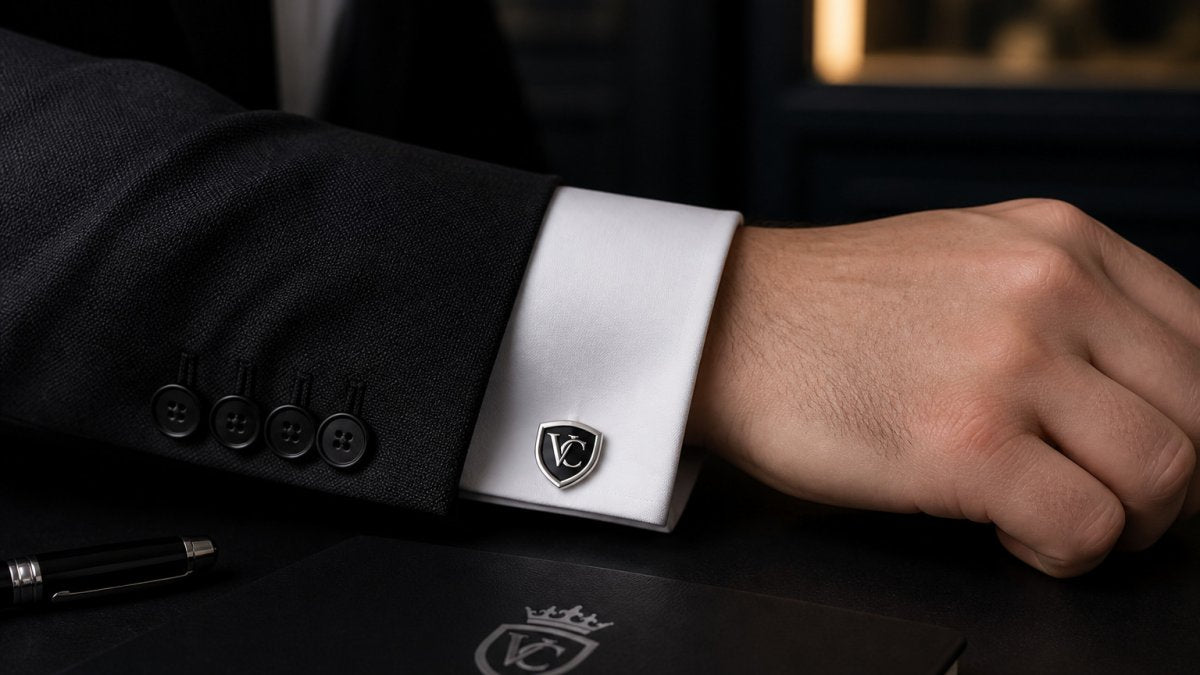
- The cuff should sit about half an inch past the jacket sleeve so the cufflink shows when you move.
- With no jacket, the cuff should end at the wrist bone, long enough to show the link, short enough not to swallow the hand.
- Keep the shirt fitted through the body; an open collar on a billowing shirt looks sloppy rather than relaxed.
Step-by-Step: Fastening Cufflinks on an Open-Collar Shirt
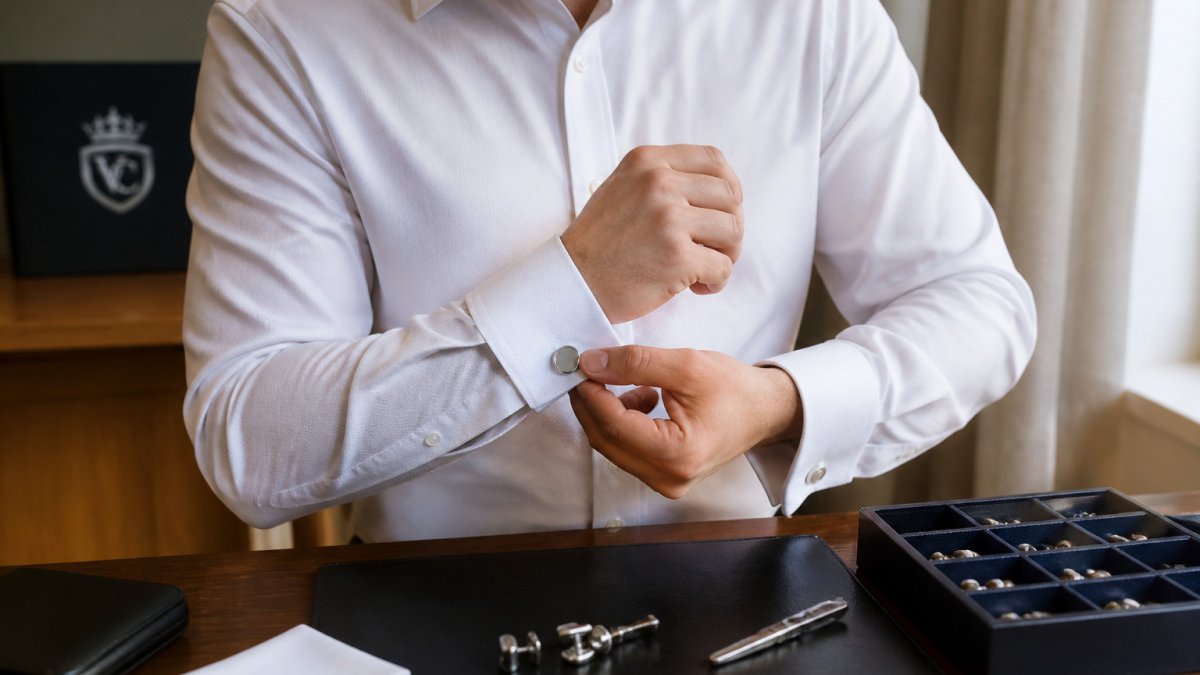
Fastening cufflinks takes less than a minute once you know the order. Work on one cuff at a time.
- Fold the cuff back so the two layers line up with the holes showing.
- Align the cuff holes so they sit directly on top of each other.
- Push the cufflink face through the front hole, then through the back hole.
- Secure the back by sliding the post or closing the mechanism.
- Check both sides so the cufflinks sit level and the faces match.
Aligning the Cuff Holes
Misaligned holes are the most common reason cufflinks look crooked. Fold the cuff slowly and hold both layers flat with your thumb until the holes sit square. If the holes do not line up, the shirt may be cut for buttons, so check the cuff before you buy.
Securing the Cufflink Back
Each style closes differently. Whale back cufflinks use a hinged bar that flips into place, while fixed-post designs slide into a fixed back. Turn the back fully until it locks, and give it a light tug to confirm it will hold.
Wearing Cufflinks Without a Jacket
Cufflinks can be worn without a jacket. Keep the cuffs down, since cufflinks on a rolled sleeve will not sit correctly.
Without a jacket, the cuffs and collar carry the whole look. Pick a pair with a clean profile so it does not compete with the shirt's details.
Choosing Occasion-Appropriate Cufflinks for an Open Collar
Most guides stop at "pick a classic pair for formal and a bold pair for fun." The harder question is what "appropriate" means when there is no tie to signal the dress code. Balancing these accessories requires a similar eye for proportion as the principles found in this casual styling guide to ensure your wristwear complements the relaxed nature of an open collar.
Executive Crown Sterling Silver Cufflinks →
Occasion-by-occasion guide
- Weddings (guest): Match the invitation. Black-tie optional means a dark suit, white French-cuff shirt, and a silver or white-metal cufflink, no tie is acceptable at the less formal end, but a tie is safer at the formal end. Daytime weddings suit a brushed or matte finish; evening weddings suit polished metal.
- Office and meetings: Keep the cufflink small, in silver or a subdued tone, and match it to your watch metal. A white or light blue shirt with a spread collar and a structured jacket reads as business formal even without a tie.
- Interviews: Conservative wins. A plain silver or white-metal cufflink, white shirt, and dark suit. Skip novelty shapes, colored enamel, or mixed metals, they distract in a high-stakes conversation.
Matching cufflink formality to the outfit
A simple rule: the cufflink should be one step more formal than the rest of the outfit, never two. A polished silver cufflink with a blazer and trousers is balanced; the same cufflink with shorts and a linen shirt is mismatched. Conversely, a novelty cufflink with a dark suit and no tie looks like a costume piece.
- Metal tone: Match the cufflink to your watch and belt hardware. Silver with silver, gold with gold. Mixed metals can work but require confidence and a deliberate contrast.
- Finish: Polished reads formal; brushed or matte reads casual. Choose the finish to match the time of day and the shirt fabric.
- Size and profile: Smaller and flatter for daytime and business; larger and more sculptural for evening and celebrations.
Common dress-code conflicts and fixes
- Open collar at a black-tie event: This is the most common conflict. A tie-free French-cuff shirt at a black-tie wedding can read as underdressed. Fix: wear the bow tie, or confirm with the host that the dress code is relaxed.
- Statement cufflinks at the office: A bold cufflink with no tie draws the eye to your wrists in a meeting. Fix: keep a plain silver pair for work and save the statement pair for evenings.
- Cufflinks with a casual shirt: Standard button cuffs will not take cufflinks properly. Fix: reserve cufflinks for French-cuff shirts.
Two VALCREST™ options suit the open-collar look well:
- Executive Crown Sterling Silver Cufflinks ($229.00): A polished sterling silver design with the signature crown motif, well suited to business and formal settings. It comes in a Silver or Gold version, and the Gold version uses 18k gold plating.
- Founder's Edition Shield Cufflinks ($329.00): An architectural shield design in sterling silver with 18k gold vermeil. It is a distinctive alternative when you want a warmer accent for a milestone occasion.
The Executive Crown Cufflinks include a presentation gift box, and the Founder's Edition Shield Cufflinks are sold without one listed.


The right cufflink formality depends on the occasion, since the tie no longer signals the dress code.
| Occasion | Suggested cufflink | Note |
|---|---|---|
| Weddings (guest) | Silver or white-metal | Brushed for daytime, polished for evening |
| Office and meetings | Small, subdued silver | Match your watch metal |
| Interviews | Plain silver or white-metal | Avoid novelty shapes and colored enamel |
| Smart-casual events | Smaller, matte finish | Pair with unstructured jacket or none |
| Black-tie and white-tie | Follow dress code | Tie-free look may read underdressed |
| Milestones and celebrations | Gold, distinctive shape, or motif | Setting invites personality |
Common Styling Mistakes and How to Fix Them
A common mistake is wearing a bold cufflink with a casual, unstructured shirt. For a complete guide to pairing cufflinks with suits, see How to Style Cufflinks With Suits: A Complete Guide. The contrast looks unplanned. Match the level of detail in the cufflink to the level of polish in the shirt.
Other frequent errors include:
- Cuffs too short: Cufflinks disappear under the jacket sleeve. Adjust the cuff length to about half an inch past the sleeve.
- Mismatched metals: Silver cufflinks with a gold watch can clash. Pick one metal family for a cleaner look.
- Crooked fastening: Rushing the alignment makes the cufflinks sit at an angle. Take an extra few seconds on each cuff.
Building Your Open-Collar Cufflink Look
Start with a crisp French-cuff shirt in a solid or subtle pattern. Keep the collar open and the fit close. Choose one cufflink pair that suits the occasion, and let it be the single detail that catches the eye.
If you are building a collection, one silver pair for everyday formal wear and one gold or statement pair for milestones gives you range without excess.
Frequently Asked Questions
What type of shirt can use cufflinks?
Cufflinks need a shirt with buttonholes in the cuff. French cuffs, which are folded back and fastened with cufflinks instead of buttons, are the classic choice. Double cuffs, which have two layers that can be fastened together, also work. Standard button cuffs can take cufflinks only if the shirt is specifically built with holes for them. Check the cuff before you buy cufflinks: if it has a single button and no extra holes, it is not designed for them.
Are cufflinks mandatory?
No, cufflinks are not mandatory. They are only appropriate with a shirt that has French or double cuffs. A shirt with buttoned cuffs does not need them. Choosing cufflinks is an option that adds a formal detail when the occasion calls for it, such as a business meeting, wedding, or gala. For everyday office wear, a standard button cuff is perfectly acceptable.
Can you wear cufflinks with a normal suit?
Yes. A suit with a dress shirt that has French cuffs is a standard pairing for formal and business events. Keep the cufflinks understated, such as polished sterling silver in a simple design, so they complement the suit rather than competing with it. The cufflinks should be visible when you extend your arm slightly, and the shirt cuff should show about a quarter to half an inch beyond the jacket sleeve.
Do cufflinks look too formal without a tie?
Not usually. Cufflinks without a tie can look polished when the shirt is crisp and fits well, the collar is open, and the outfit has a clear structure, such as a dark suit or tailored jacket. They can look overdressed if you pair them with a casual outfit, like jeans and a sweater. Match the cufflink style to the setting: understated pieces suit business and evening events, and bolder designs suit celebrations.
Explore the VALCREST™ collection to find a pair that suits your open-collar look. Each piece is crafted from sterling silver or vermeil and built to be worn for years. Shop the Collection.