How to Choose Cufflinks for a Formal Suit
Table of Contents
- Start With the Dress Code: A Cufflink Decision Tree
- Cufflink Types and Fastening Mechanisms
- The French Cuff Shirt and Cufflinks: Getting the Fit Right
- How to Match Cufflinks With a Suit
- Cufflinks for a Tuxedo: Black Tie Rules That Still Apply
- Cufflink Etiquette: The Unwritten Rules
- Choosing Formal Suit Cufflinks: Metals, Colors, and Budget
- Conclusion: A Quiet Standard You Can Wear
- Frequently Asked Questions
Last Updated: October 17, 2026
Start With the Dress Code: A Cufflink Decision Tree
The fastest way to learn how to choose cufflinks for a formal suit is to read the invitation before you read the jewelry case. Dress code dictates metal, finish, and restraint. At VALCREST™, we build every pair around that principle: the cufflink should answer to the dress code, not compete with it.
Here is the decision tree we recommend:
- White tie: silver or white gold only, small and plain. No stones, no novelty.
- Black tie: silver, gold, or onyx. Keep the face under 16mm.
- Business formal: match your watch metal. Understated emblems are fine.
- Cocktail or creative black tie: warmer metals and bolder shapes earn a pass.
Get this order right and everything else follows. Get it wrong and no amount of polish saves the outfit.
Black Tie and White Tie
White tie is the most rigid dress code in menswear, and cufflinks follow suit. Choose small, plain links in silver or white gold. Skip anything with color or a logo.
Black tie loosens the rope slightly. Silver, gold, and black onyx all work. The official black tie dress code guidance from the Emily Post Institute treats cufflinks as a required finishing detail, not an optional one.
Business Formal and Cocktail
Business formal rewards quiet consistency. Match your cufflink metal to your watch case and belt buckle. A silver watch wants silver links.
Cocktail attire gives you room to play. A warmer gold tone or a distinctive emblem reads as intent rather than accident.
Cufflink Types and Fastening Mechanisms
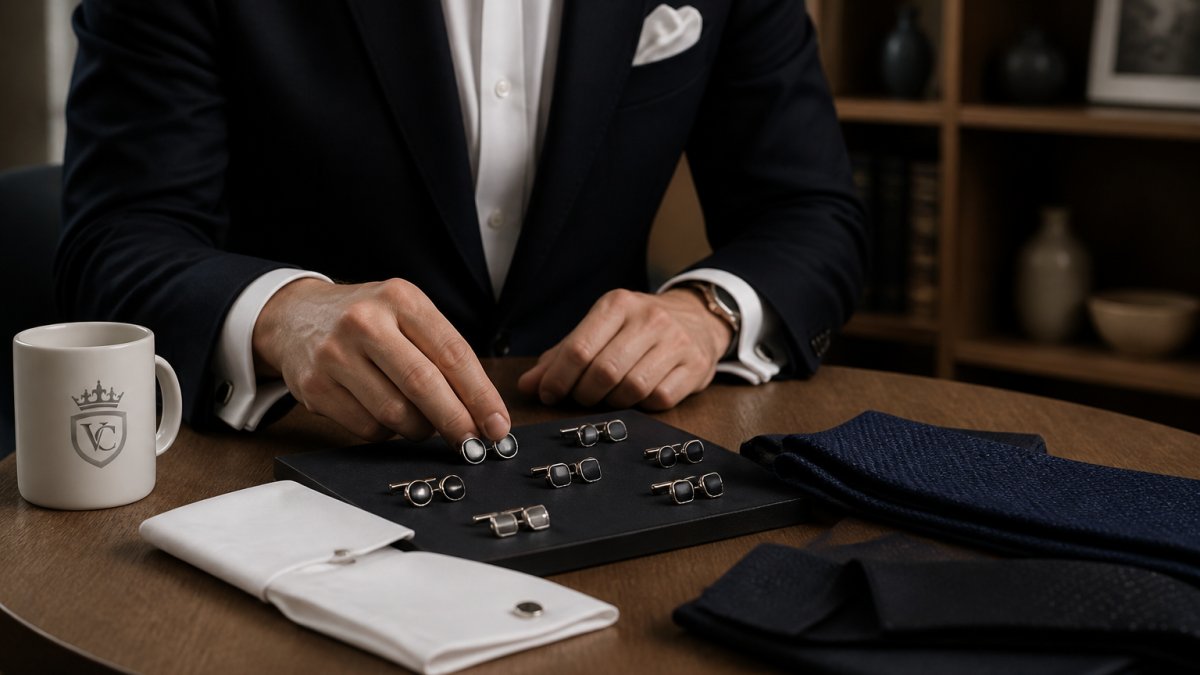
Cufflink type matters more than most buyers expect, because the fastening decides three things: how easy the pair is to put on, how comfortably it sits under a suit sleeve, and how likely it is to come undone during a long event. The four mechanisms below cover nearly every pair on the market, and each trades off differently.
- Whale back: a rotating bar that flips to lock behind the cuff. The bar sits flat against the wrist once engaged, so it slides under a tight sleeve without catching. Fastening is quick with one hand, and the lock is among the most secure. Our preferred daily mechanism for formal wear.
- Bullet back: a pivoting torpedo-shaped bar that swivels into place. Similar security to a whale back and equally easy to fasten, but the rounded bar can feel bulkier against the wrist under a slim cuff. A classic, reliable choice.
- Fixed post: a straight post with a toggle or threaded cap. The flattest profile of any type, which makes it the best option under a closely tailored sleeve. The trade-off is speed: threading a fixed post through four aligned holes takes longer, and a loose toggle is the most common cause of a lost link.
- Chain link: two faces joined by a short chain. The most traditional look and the most forgiving of slightly misaligned cuff holes, because the chain flexes. It is also the most prone to snagging on sleeve linings and the least secure if a chain link opens.
For daily wear, whale back and bullet back win on the balance of security and speed. Fixed posts suit anyone who wants a flatter profile under a tight cuff or prefers a cleaner back view. Chain links are best reserved for occasions where the cuff is roomy and the sleeve is not tightly fitted.
A few practical notes that separate a secure pair from a lost one:
- Check the tension. A new whale back or bullet back should snap firmly into place. If the bar rotates loosely, the spring has weakened and the link will work itself open.
- Match the mechanism to the cuff. A thick double cuff needs a longer post or bar than a slim one; a short post on a thick cuff will not clear both holes.
- Consider the sleeve. If your suit jacket has a tight cuff opening, a flat fixed post or a low-profile whale back will sit better than a bulky bullet back.
A cufflink that rotates freely or feels loose is a cufflink you will lose. Test the fastening at home before you wear a pair to an event where a missing link cannot be replaced.
The French Cuff Shirt and Cufflinks: Getting the Fit Right
A French cuff shirt and cufflinks only work together when the cuff is built for them. Not every dress shirt accepts a cufflink, and the ones that do vary in how the holes line up. Getting this right is the step most buyers skip, and it is the reason a good pair of links can still look wrong.
Which cuffs accept cufflinks. Only a French cuff (also called a double cuff) is designed for cufflinks. The cuff folds back on itself, and the four buttonholes, two on each side, align so a cufflink passes through all four layers.
How the holes should align. On a correctly made French cuff, the four holes line up cleanly when the cuff is folded back, and the link passes through all four. Two problems show up most often:
- Holes too far apart. The link pulls and twists, and the cuff gapes at the wrist. This is a shirt-construction issue, not a cufflink issue, and no link will fix it.
- Cuff too loose. The link hangs rather than sits, and the cuff slides down over the hand. The cuff should sit snug at the wrist with room for one finger.
Try the shirt on before you size the link. Fold the cuff back, check that the holes align, and note the distance between the front and back holes, that distance tells you how long a post or bar the cuff needs.
What to do when a shirt is not designed for cufflinks. If you own a shirt with a button cuff and want the cufflink look, the practical options are limited: wear a different shirt, or have a tailor convert the cuff to a French cuff, which is a real alteration but not a cheap or quick one. Do not try to thread a cufflink through a single-layer button cuff; it will not sit correctly and can damage the fabric.
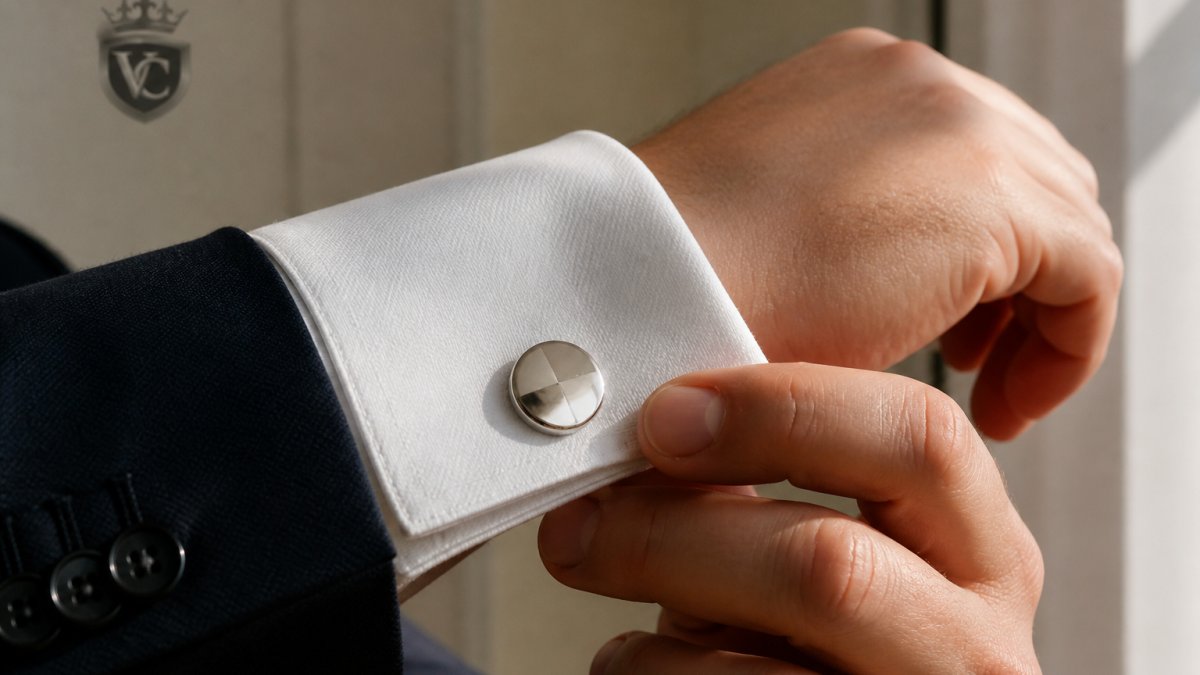
Face diameter should match cuff proportion. A 16mm face suits most dress shirts and is the safe default for business formal and black tie. A larger face, 26mm, like our Heritage British Shilling Cufflinks, needs a wider cuff and a roomier sleeve to sit properly; on a slim cuff it will overhang and look oversized. When in doubt, size down rather than up.

Check the shirt before the link: confirm it is a French or convertible cuff, fold it back, and verify the four holes align. The right cufflink on the wrong cuff will never look right.
How to Match Cufflinks With a Suit
Matching cufflinks with a suit comes down to three dials: metal, contrast, and restraint. Here is how we would approach it.
Executive Crown Sterling Silver Cufflinks →
- Match the metal to your other hardware. Silver links with a silver watch and buckle. Gold with gold.
- Use contrast deliberately. A silver link on a navy suit reads crisp. A gold link on charcoal reads warm.
- Keep one focal point. If your tie is loud, keep the links quiet.
The menswear guidance from GQ on accessorizing a suit makes the same point: accessories should support the outfit, not fight it.
Pairings for Navy, Charcoal, and Black Suits
| Suit Color | Best Metal | Finish | Avoid |
|---|---|---|---|
| Navy | Silver or white gold | Polished | Bright yellow gold |
| Charcoal | Silver or gold | Satin or polished | Oversized faces |
| Black | Silver or onyx | Polished | Colored stones |
Navy is the most forgiving. Charcoal rewards warm gold. Black wants high contrast and small faces.
Cufflinks for a Tuxedo: Black Tie Rules That Still Apply
Cufflinks for a tuxedo should be small, metallic, and quiet. Silver, white gold, or black onyx are the safe choices. Skip anything with color, stones, or a visible logo.
The rules that still apply:
- Keep the face under 16mm.
- Match the metal to your studs.
- Choose a secure fastening, since tuxedo cuffs are often tighter.
Our Executive Crown Sterling Silver Cufflinks sit at 16mm with a whale back closure, which is exactly the proportion black tie expects. The gold version adds warmth without breaking the rules.

Cufflink Etiquette: The Unwritten Rules
Cufflink etiquette is simpler than the folklore suggests. Wear them only with French cuffs. Match your metals. Keep them quiet in formal settings.
A few rules worth knowing:
- Never wear cufflinks with a button cuff.
- Match cufflink metal to watch and belt hardware.
- Keep novelty designs for casual or creative events.
- Fasten them yourself; asking for help looks unsure.
Wearing novelty or oversized cufflinks to a black tie event is the most common formalwear mistake we see. It reads as costume rather than confidence, and it undercuts an otherwise correct outfit.
Choosing Formal Suit Cufflinks: Metals, Colors, and Budget
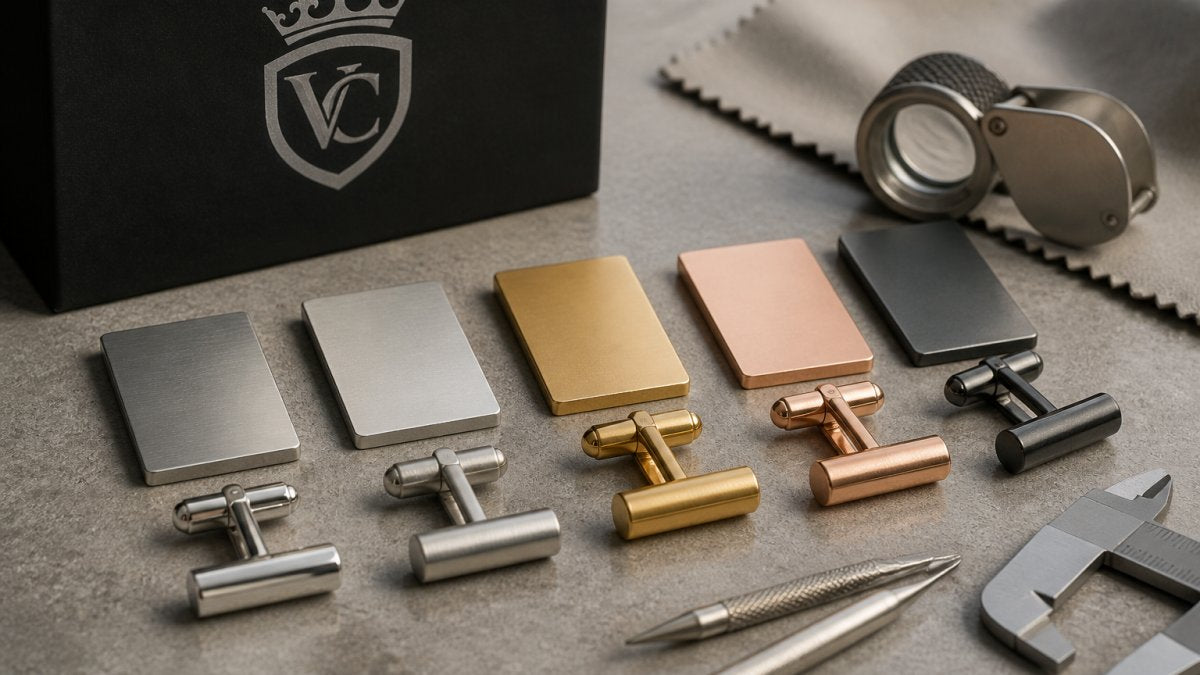
Choosing formal suit cufflinks is a question of material honesty and value. Sterling silver and vermeil last. Plated base metal does not.
What to weigh:
- Sterling silver: durable, ages well, easy to polish.
- Vermeil: sterling silver with a thick gold layer, warmer tone, needs gentle care.
- Plated base metal: cheaper upfront, tarnishes faster.
On budget, buy fewer pairs and buy better. Two well-made pairs cover nearly every formal occasion. Our Founder's Edition Shield Cufflinks use sterling silver with 18k gold vermeil and a fixed-post fastening, built as a milestone piece rather than a disposable one. At $329, they sit in heirloom territory, and that is the point.

Conclusion: A Quiet Standard You Can Wear
The hard part of formal dressing is not the suit. It is the small decisions that reveal whether you meant it. Cufflinks are one of those decisions.
Get the dress code right, match your metals, and buy material that lasts. That is the whole method.
At VALCREST™, we craft cufflinks in sterling silver and vermeil with heritage-inspired design, built to last generations. Our pieces are made for men who treat discipline as a personal standard, not a performance. Shop the Collection and finish the outfit properly.
Frequently Asked Questions
Do tuxedo studs and cufflinks have to match?
They should coordinate, not necessarily match exactly. Black tie tradition favors a matched set in the same metal and finish, so silver studs pair with silver cufflinks and onyx accents pair with onyx. If you are building a collection gradually, start with a classic sterling silver pair like the Executive Crown Cufflinks and choose studs in the same tone. Contrasting metals between studs and cufflinks reads as an oversight at a formal occasion, not a style choice.
Should cufflinks match your watch or belt buckle?
Match the metal tone, not the exact design. If your watch case and belt buckle are silver, choose silver cufflinks; if they are gold, choose gold or vermeil. This is the core of how to match cufflinks with a suit. One exception: a two-tone watch (steel and gold) gives you flexibility to wear either metal. Avoid wearing three different metals at once, because the eye reads it as clutter rather than coordination.
Can you wear any cufflinks with a French cuff shirt?
Most cufflinks fit most French cuffs, but check two things before buying. First, the cuff holes: standard dress shirts use holes around 10 to 12 millimeters, and a 16 millimeter face like the Executive Crown sits well on that. Second, the closure type: whale back and fixed-post fastenings both work, but very thick cuffs can make a short post hard to fasten. If your shirt has stiff, double-layer cuffs, test the fit before a formal event.
Are novelty cufflinks appropriate for formal occasions?
Rarely. Black tie, white tie, and business formal call for classic shapes: rounds, ovals, shields, and simple geometric designs in silver, gold, or a dark stone. Novelty designs (characters, sports logos, novelty motifs) belong at casual events, weddings with a relaxed dress code, or as a personal conversation piece. At a gala or board meeting, a classic pair reads as discipline; a novelty pair reads as distraction. Save the playful pairs for less formal settings.