How to Clean Gold Vermeil Jewelry: Complete Guide
Table of Contents
- Why Gold Vermeil Requires Gentle Care
- What You'll Need to Clean Gold Vermeil Jewelry
- Step-by-Step: How to Clean Gold Vermeil Jewelry
- Does Gold Vermeil Tarnish? Understanding Discoloration
- How to Store Gold Vermeil Jewelry to Prevent Damage
- Gold Vermeil Jewelry Care: What to Avoid
- Maintenance Schedule and When to Seek Professional Help
- Frequently Asked Questions
Last Updated: October 17, 2026
Why Gold Vermeil Requires Gentle Care
Gold vermeil jewelry sits at the intersection of luxury and delicacy. The construction itself demands respect. Vermeil consists of a layer of gold bonded to sterling silver underneath. That gold layer, while beautiful, is thin. Treat it roughly and it wears through. The sterling silver beneath tarnishes quickly once exposed.
This is where most people go wrong. They assume vermeil is just "gold jewelry" and clean it like solid gold. It isn't. The care requirements are fundamentally different. At VALCREST™, we craft each cufflink from sterling silver with a vermeil finish specifically because this combination delivers both sophistication and longevity when maintained properly.
Understanding why vermeil needs gentle care changes how you approach cleaning. The gold layer protects the silver underneath from tarnish and oxidation. Aggressive scrubbing, harsh chemicals, or abrasive cloths can strip away that protective layer faster than you'd expect. Once compromised, the underlying silver darkens and discolors within weeks.
The good news: proper care is straightforward. It requires no special equipment and no expensive products. What it requires is intentionality. A few minutes of attention every few weeks preserves vermeil jewelry for decades.
What You'll Need to Clean Gold Vermeil Jewelry
Gather these items before you start. You likely have most of them already.
Essential supplies:
- A soft, dry microfiber cloth
- Mild liquid dish soap
- Lukewarm water
- A small bowl
- A soft-bristled brush (optional, for detailed settings)
- A clean towel
That's the complete list. No special jewelry cleaner needed. No ultrasonic machine required. No polishing compounds or chemical solutions.
The microfiber cloth is your workhorse. It removes surface oils and light tarnish without scratching. A regular cotton cloth works in a pinch, but microfiber is gentler and more effective. Keep one dedicated to jewelry only.
Mild dish soap is all you need for deeper cleaning. The kind you use on dishes works perfectly. Avoid anything labeled "antibacterial" or "degreasing", these formulations are too harsh for vermeil.
Lukewarm water matters more than you'd think. Cold water doesn't dissolve soap effectively. Hot water can damage the gold-silver bond over time. Lukewarm, roughly body temperature, is the sweet spot.
Choosing the Right Gold Vermeil Cleaning Cloth
Not all soft cloths are equal. The wrong one can do more harm than good.
Microfiber cloth: This is your best choice. Microfiber traps dirt and oils without requiring pressure. The fibers are fine enough to clean without scratching. One quality microfiber cloth costs just a few dollars and lasts for years.
Cotton cloth: A soft cotton cloth works for routine maintenance. It's less effective than microfiber at removing oils, but it won't damage your pieces. Avoid rough or textured cotton, smooth, soft cotton only.
What to avoid: Never use paper towels, tissues, or rough fabrics. These scratch the gold layer. Never use cloths treated with chemicals or polishing compounds. These are designed for solid gold and can damage vermeil.
Store your cleaning cloth in a small ziplock bag to keep it dust-free between uses. A clean cloth makes a real difference in how well you can maintain your gold vermeil jewelry.
Step-by-Step: How to Clean Gold Vermeil Jewelry
The process takes less than five minutes for routine cleaning. Deep cleaning takes about ten.
Routine Cleaning with a Soft Cloth
Do this weekly if you wear your pieces regularly. More often if you wear them daily.
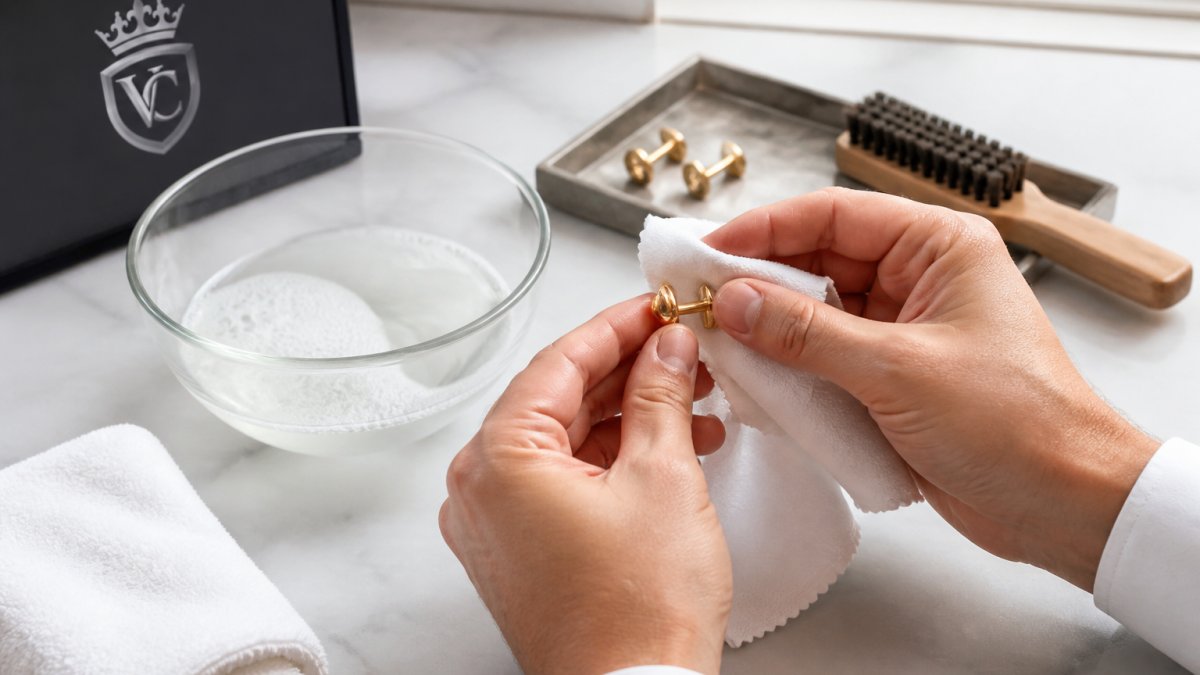
Step 1: Wipe the surface Take your dry microfiber cloth and gently wipe each piece. Use light pressure, no scrubbing. You're removing skin oils, dust, and light surface residue. This alone keeps most vermeil jewelry looking bright between deeper cleanings.
Step 2: Focus on crevices If your piece has detailed settings or textured areas, use a corner of the cloth to reach into crevices. Skin oils accumulate in these spots. A few seconds of gentle attention here prevents buildup.
Step 3: Store immediately Put the piece away once you've wiped it. Don't leave it exposed to air longer than necessary.
Routine cleaning with a soft cloth is genuinely sufficient for most people most of the time. You don't need soap and water for this. The cloth does the work.
Deep Cleaning with Mild Soap and Water
Do this monthly, or whenever you notice buildup or light tarnishing.
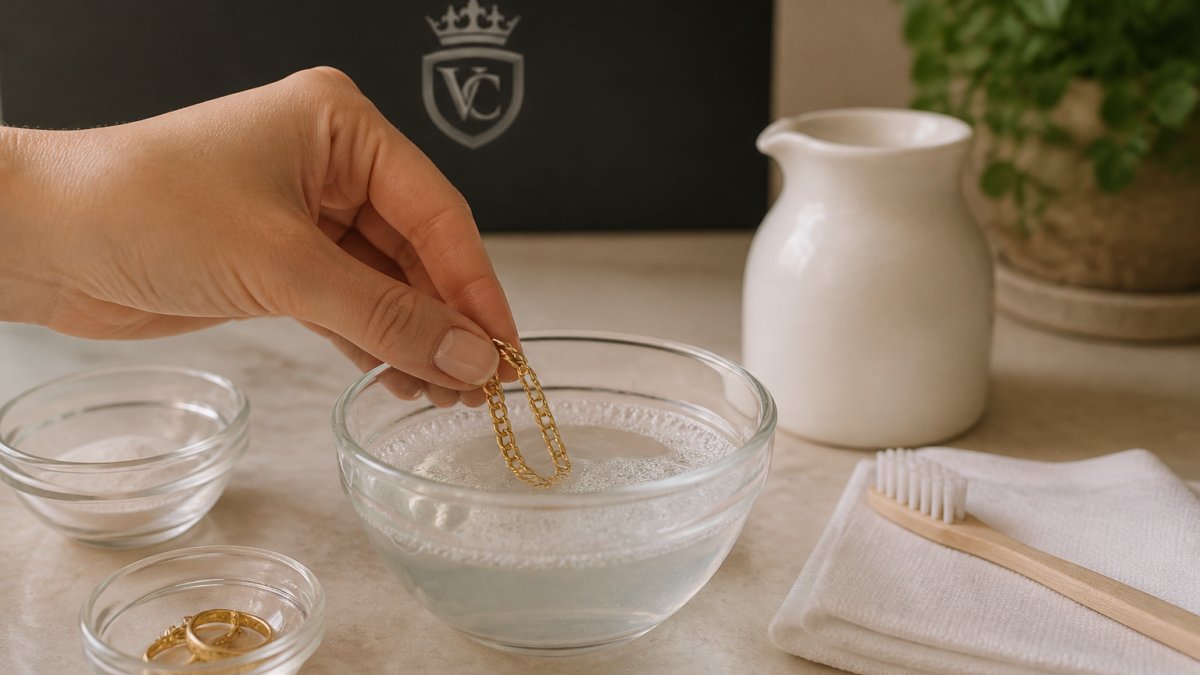
Step 1: Prepare the solution Fill a small bowl with lukewarm water. Add a drop of mild dish soap. That's it. You want barely-soapy water, not a bubble bath. Too much soap leaves residue.
Step 2: Soak briefly Place your jewelry in the bowl. Let it sit for 2-3 minutes. Don't soak longer. Extended soaking can weaken the gold-silver bond over time. A short soak is enough to loosen dirt and oils.
Step 3: Gentle brushing Use a soft-bristled brush to gently brush the piece. Focus on textured areas and settings where dirt hides. Use light pressure. You're loosening debris, not scrubbing it away.
Step 4: Rinse thoroughly Hold the piece under running lukewarm water. Let water flow over all surfaces. Make sure no soap residue remains. Soap left on the surface leaves spots and buildup.
Step 5: Dry immediately Pat the piece dry with a clean, soft towel. Don't air-dry. Water spots can form. Moisture left on the surface can promote tarnishing. Dry it completely before storing.
Drying and Final Care
Proper drying is as important as the cleaning itself.
Pat, don't rub. Use a gentle patting motion with your towel. Rubbing can scratch the gold layer, especially if any grit is still present.
Get into crevices. Use a corner of the towel to reach into textured areas and settings. Any moisture left behind can cause tarnishing.
Let air circulation finish the job. After patting dry, leave the piece uncovered for a minute or two. This allows any remaining moisture to evaporate.
Store in a dry place. Once fully dry, store your jewelry in a cool, dry location. Humidity promotes tarnishing.
Does Gold Vermeil Tarnish? Understanding Discoloration
Yes, gold vermeil tarnishes. The sterling silver underneath is prone to oxidation. This is normal. Understanding what you're seeing helps you know when to clean and when to seek professional care.
Light tarnishing appears as a subtle darkening or dullness. The piece looks less bright than when new. This is surface-level oxidation. A soft cloth wipe or a gentle soap-and-water cleaning removes it easily.
Heavy tarnishing shows as dark spots or patches, often in crevices or along edges. The discoloration has penetrated slightly deeper. Deep cleaning with soap and water usually restores the piece. If it doesn't, the gold layer may be compromised.
Worn plating is different from tarnish. If the gold layer has worn through, you'll see the silver showing through as lighter patches or lines. This happens from friction, cufflinks rubbing against cuffs, rings rubbing against other surfaces.
The distinction matters because it determines your next step. Tarnish is cosmetic and reversible. Worn plating requires professional replating if you want to restore the piece fully. A jeweler can replate vermeil pieces, restoring them to like-new condition.
How to Store Gold Vermeil Jewelry to Prevent Damage
Storage is half the battle. The right conditions slow tarnishing dramatically.
Keep it dry. Moisture accelerates tarnishing. Store jewelry in a dry environment. A bathroom is a poor choice because humidity is high.
Use airtight containers. Small ziplock bags work perfectly. They keep air and moisture away from the piece. Alternatively, use a jewelry box with a sealed compartment.
Add silica packets. Toss a small silica gel packet in the storage container. These absorb ambient moisture. You can buy them inexpensively online.
Separate pieces. Store each piece individually or separated by soft cloth. Pieces touching each other can scratch. Even soft contact, over time, wears the gold layer.
Avoid plastic bags long-term. Plastic can trap moisture. Use it for short-term storage only. For long-term storage, use airtight glass containers or sealed jewelry boxes.
Keep away from sunlight. Extended sunlight exposure can fade the gold color slightly over time. A dark closet or drawer is ideal.
Don't store in the bathroom. The humidity from showers and baths accelerates tarnishing.
Proper storage prevents the need for frequent deep cleaning. Pieces stored well stay bright and beautiful for years.
Gold Vermeil Jewelry Care: What to Avoid
Knowing what not to do is as important as knowing what to do.
Never use ultrasonic cleaners. These machines vibrate at high frequency.
Never use harsh chemicals. Bleach, ammonia, alcohol-based cleaners, and acetone all damage vermeil. They strip the gold layer and corrode the silver.
Never use abrasive materials. Steel wool, scouring pads, toothbrushes with stiff bristles, and polishing compounds all scratch the gold.
Never soak for extended periods. More than 3-5 minutes in water can weaken the gold-silver bond. Keep soaking brief.
Never use toothpaste. Toothpaste is mildly abrasive and contains chemicals that can damage the gold layer. This is a common mistake.
Never expose to extreme temperatures. Rapid temperature changes can stress the gold-silver bond. Avoid moving jewelry directly from cold to hot environments.
Never wear while exercising or swimming. Sweat and chlorine both accelerate tarnishing and can damage the gold layer.
Never store with rubber bands or elastic. These materials can leave marks and damage the gold finish.
Never ignore visible damage. If you notice the gold wearing through, address it sooner rather than later. The exposed silver tarnishes quickly.
Maintenance Schedule and When to Seek Professional Help
A simple schedule keeps your gold vermeil jewelry in excellent condition.
Weekly: Wipe with a soft, dry microfiber cloth if worn regularly.
Monthly: Deep clean with mild soap and lukewarm water.
Every 3-6 months: Inspect for signs of wear or tarnishing that won't come clean.
Annually: Consider professional cleaning if the piece shows heavy tarnishing or buildup in crevices.
When to seek professional help:
- The gold layer is visibly worn through in spots
- Heavy tarnishing doesn't respond to gentle cleaning
- The piece has structural damage (bent posts, loose settings)
- You want to restore the piece to like-new condition
- The piece is valuable and you want expert care
A professional jeweler can clean vermeil pieces more thoroughly than home cleaning allows. They have specialized equipment and solutions safe for vermeil. They can also replate pieces if the gold layer is significantly worn. Replating restores both appearance and protection for the underlying silver.
For pieces you wear frequently, like the cufflinks from VALCREST™ that anchor your professional wardrobe, professional cleaning every 1-2 years is a reasonable investment. These pieces are meant to endure for generations. A little professional maintenance ensures they do.
Keeping gold vermeil jewelry clean and protected is straightforward once you understand what the material needs. Gentle handling, simple cleaning with mild soap and water, proper storage, and a consistent maintenance schedule preserve the beauty and integrity of your pieces. The effort is minimal. The reward is jewelry that stays brilliant and beautiful for decades.
Frequently Asked Questions
Does gold vermeil jewelry tarnish?
Yes, gold vermeil can tarnish over time. The gold layer sits atop sterling silver, and exposure to air, moisture, and skin oils causes the underlying silver to oxidize, creating a dark discoloration. This is normal and does not mean your jewelry is damaged. Regular cleaning and proper storage slow tarnishing significantly. If tarnish appears, gentle cleaning with a soft cloth and mild soap restores the shine.
What's the best cloth for cleaning gold vermeil jewelry?
A microfiber cloth is ideal for gold vermeil cleaning. It's soft enough to avoid scratching the delicate gold layer while effectively removing dust and oils. Avoid paper towels or rough fabrics. Keep a dedicated microfiber cloth in your jewelry storage for quick daily wipe-downs. For deep cleaning, use the cloth after soaking in mild soap and lukewarm water.
Can I use commercial jewelry cleaner on gold vermeil?
Most commercial jewelry cleaners are too harsh for vermeil and can damage or strip the gold layer. Stick to mild dish soap and lukewarm water for safe cleaning. If you choose a commercial cleaner, verify it's formulated for delicate gold-plated or vermeil pieces. Always test on an inconspicuous area first, and rinse thoroughly with distilled water afterward.
How often should I clean my gold vermeil jewelry?
Wipe down your gold vermeil pieces with a soft, dry cloth 2-3 times per week to remove skin oils and dust. Deep clean with mild soap and water every 1-2 months, depending on how frequently you wear them. If you wear vermeil daily, increase deep cleaning to monthly. Storage in a dry environment and minimal exposure to moisture extend the time between cleanings.