
7 Ways to Style Silver Cufflinks for Office Attire
Last Updated: October 28, 2026
Quick Summary
Wear silver cufflinks with a French-cuff shirt, folding the cuff once so both layers line up and passing the cufflink through them. Pair them with a white or light blue shirt, a navy or charcoal suit, and a restrained tie, keeping silver as the single dominant metal accent at the wrist.
- Silver cufflinks only work with a French cuff, since standard button cuffs lack buttonholes sized for a cufflink.
- Fold the cuff back once, pass the link through both layers, and check it sits level with the cuff edge.
- A solid white poplin or light blue shirt shows silver cufflinks to their best advantage.
- Choose one dominant metal and keep finishes consistent, limiting yourself to two metal tones at most.
- A polished 14-16 mm round or oval sterling silver cufflink suits most of the seven office looks.
Table of Contents
- Why Silver Cufflinks Suit the Modern Office
- How to Wear Cufflinks With a Business Shirt
- Pair Silver Cufflinks With a Navy Suit
- Choose the Right Shirt to Wear With Cufflinks
- Match Your Cufflinks With a Watch and Other Metals
- Seven Silver Cufflink Looks for Different Office Settings
- Keeping Your Silver Cufflinks Office-Appropriate
- Choosing Your Next Pair of Office Cufflinks
- Frequently Asked Questions
Silver cufflinks are one of the few accessories that signal care without shouting. Worn well, they add a quiet finish to a shirt cuff that most colleagues will notice without being able to name. This guide from VALCREST™ walks through seven practical ways to wear sterling silver cufflinks in an American office, from conservative corporate settings to more relaxed workplaces where a dress shirt still matters.
Why Silver Cufflinks Suit the Modern Office
Silver works with white, blue, and light patterned shirts, and it coordinates easily with a watch, belt buckle, or tie clip. Gold draws more attention, while silver stays understated.
Our pick for most professionals is a polished sterling silver pair with a simple profile.
How to Wear Cufflinks With a Business Shirt
Cufflinks only work with a French cuff, sometimes called a double cuff. A standard button cuff has no buttonholes sized for a cufflink, so the link cannot pass through.
To wear them correctly:
- Fold the cuff back once so the two layers line up.
- Pass the cufflink through both layers of fabric from the front.
- Secure the back, whether a whale back or a fixed post, so the face lies flat against the cuff.
- Check that the cufflink sits level with the cuff edge, not tilted or hanging.
Watch out: a cufflink that gapes or flips out of the buttonhole usually means the shirt cuff is too loose at the buttonhole. Fix the fit before blaming the cufflink.
Pair Silver Cufflinks With a Navy Suit
A navy suit with a white or pale blue shirt and polished silver cufflinks gives a crisp, professional line.

Keep the rest of the outfit restrained. A solid or subtly patterned tie, a leather belt in brown or black, and matching dress shoes complete the look. Avoid stacking too many metals at the wrist, because silver cufflinks look best as one clean accent.
Choose the Right Shirt to Wear With Cufflinks
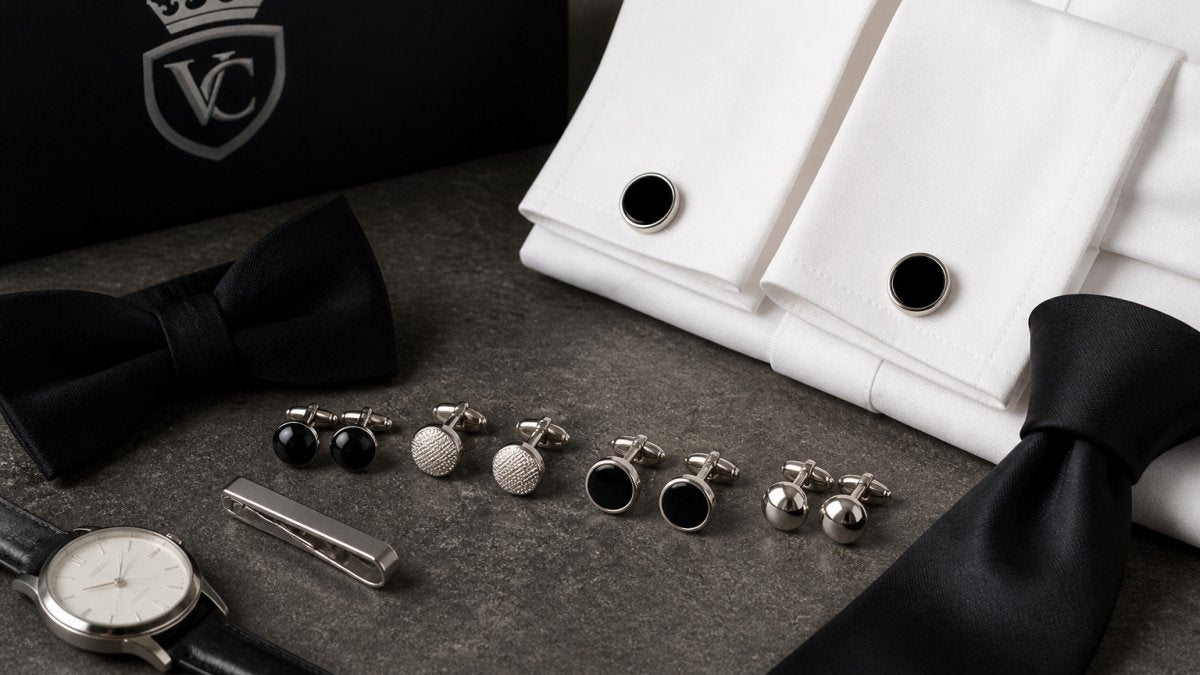
The shirt determines how visible the cufflink becomes. A solid white poplin shirt with a French cuff is the simplest choice and shows silver to its best advantage. Light blue works equally well and suits a wider range of ties.
Stripes and subtle checks also pair well with silver. Heavily patterned shirts compete with the cufflink, so save bold prints for days when you wear no cufflinks at all. Make sure the cuff length lets roughly a quarter inch of shirt show beyond the jacket sleeve.
Match Your Cufflinks With a Watch and Other Metals
The practical rule is simpler than the old 'match everything' advice: pick one dominant metal, keep finishes consistent, and limit yourself to two metal tones at most. For a dedicated guide to coordinating metals and finishes, read the Matching Cufflinks To Your Watch Executive Guide.
The dominant-metal rule. Your watch case is usually the largest metal surface you wear, so let it set the tone. If your watch is stainless steel or silver-toned, silver cufflinks are the natural default. If your watch is gold, you can still wear silver cufflinks, but treat gold as the accent and keep the rest of the outfit, belt buckle, tie bar, pen, silver or leather-and-silver so the gold does not multiply.
Match the finish, not just the color. Polished silver cufflinks sit best with a polished steel watch case and a polished silver belt buckle. Brushed or matte silver cufflinks pair more naturally with a brushed watch case, a titanium watch, or a leather-strap watch with a brushed buckle. Mixing a high-polish cufflink with a brushed watch is the most common coordination mistake because the two silvers read as different colors under office lighting.
Belt buckle and tie bar. A silver belt buckle is the easiest match for silver cufflinks; a gold buckle with silver cufflinks is acceptable only if the buckle is small and the watch is also gold. A silver tie bar should match the cufflink finish, polished with polished, brushed with brushed, and should sit no wider than the tie itself.
Watch straps change the equation. A black or brown leather strap softens the metal message, so you have more freedom to mix. A steel bracelet makes the watch the dominant metal, which means the cufflinks should follow the bracelet's finish. A two-tone watch (steel and gold) is the one case where mixing silver and gold accessories is clearly acceptable, because the watch already does it.
Executive Crown Sterling Silver Cufflinks →
What to avoid. Do not wear three or more distinct metal tones at once. Do not pair silver cufflinks with a gold belt buckle and a gold watch unless the gold pieces are visually small. And do not match cufflinks to eyeglass frames, frame metal is too far from the wrist to read as a set, and forcing the match usually makes the cufflinks look chosen rather than worn.
Our Executive Crown Sterling Silver Cufflinks use a polished silver finish.

Seven Silver Cufflink Looks for Different Office Settings
The right silver cufflink look depends less on the cufflink itself and more on the shirt, suit, and setting around it. The seven outfits below are complete formulas, shirt, suit, tie, and cufflink finish. Treat each as a starting point and adjust one variable at a time.
-
Traditional corporate (conservative suit-and-tie office): White poplar or broadcloth French-cuff shirt, navy two-button suit, a solid burgundy or navy tie, black cap-toe oxfords, and a black leather belt with a silver buckle. Choose a polished sterling silver cufflink with a plain round or oval face, roughly 14-16 mm.
-
Client-facing finance or law: Light blue French-cuff shirt, charcoal suit, a subtle grenadine or rep-stripe tie in navy or burgundy, and black whole-cut or cap-toe shoes.
-
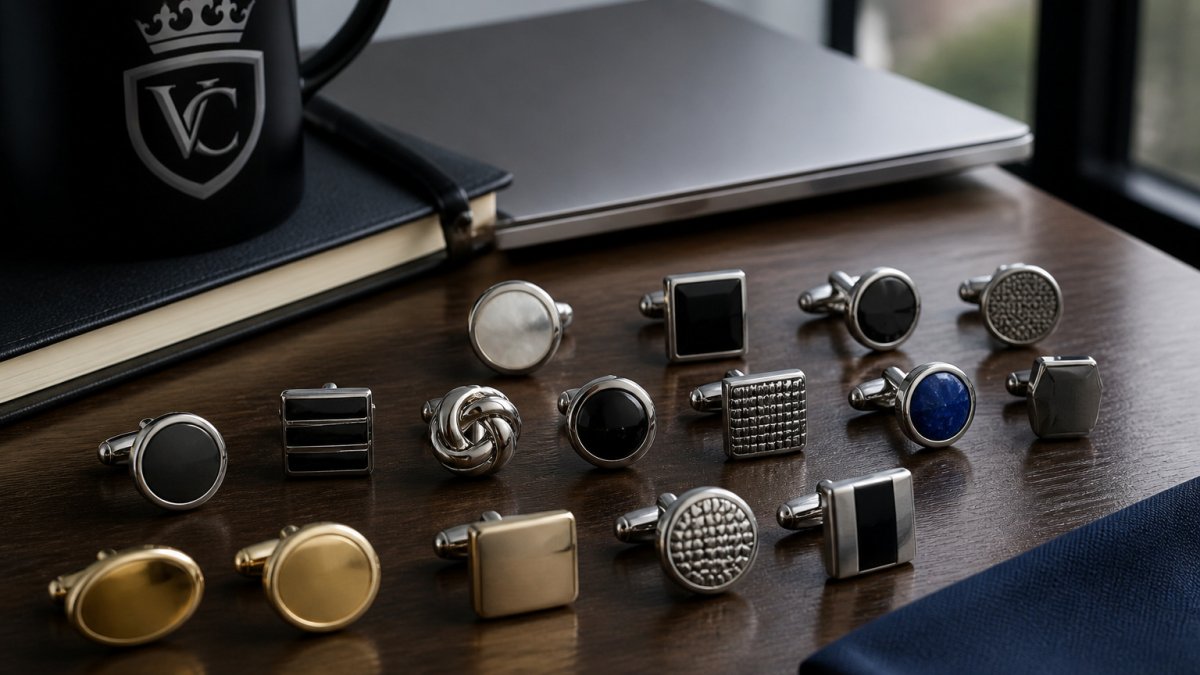
Executive leadership meetings: White shirt, dark charcoal or midnight navy suit with a fine pinstripe, and a silver cufflink with a slightly bolder shape, a shield, rectangle, or octagon, in a polished finish. Pair with a silver tie bar placed between the third and fourth shirt buttons.
-
Creative or design firms: A textured shirt, end-on-end, herringbone, or a fine micro-check, in white or pale blue, a lighter suit in mid-gray or tan.
-
Business casual offices: An open-collar French-cuff shirt (no tie) under a fine-gauge crewneck sweater or an unstructured blazer, chinos or wool trousers.
-
Conference and speaking days: Tailored suit, white or light blue shirt, and a silver cufflink with a geometric face. Add a matching silver tie bar and keep the pocket square solid white or pale blue.
-
After-work events: Keep the day's suit and silver cufflinks, drop the tie, and add a pocket square in a color pulled from the shirt or suit.
The table below summarises the seven looks by setting, so you can match a formula to your workplace at a glance.
| Look | Best for | Key difference |
|---|---|---|
| Traditional corporate | Conservative suit-and-tie office | Navy suit, burgundy or navy tie, 14-16 mm polished cufflink |
| Client-facing finance or law | Client-facing finance or law | Charcoal suit, subtle grenadine or rep-stripe tie |
| Executive leadership meetings | Executive leadership meetings | Bolder shield, rectangle or octagon face, silver tie bar |
| Creative or design firms | Creative or design firms | Textured shirt, mid-gray or tan suit |
| Business casual offices | Business casual offices | Open collar, no tie, fine-gauge crewneck or unstructured blazer |
| Conference and speaking days | Conference and speaking days | Geometric face, matching silver tie bar, solid pocket square |
| After-work events | After-work events | Tie dropped, pocket square in a shirt or suit colour |
Keeping Your Silver Cufflinks Office-Appropriate
Keep them polished and inspect the backs regularly, since a loose post can cause a cufflink to fall out during the day. For more on cufflinks built for everyday office use, see Durable Cufflinks for Daily Office Wear: A Buyer's Guide. Store them separately in a box or dish so the faces do not scratch. Sterling silver tarnishes over time, so a soft polishing cloth is worth keeping in your desk drawer.
Choosing Your Next Pair of Office Cufflinks
Our Heritage British Shilling Cufflinks feature authentic vintage silver British shillings, sterling silver bezels, and an 18k gold vermeil finish. The Executive Crown pair features sterling silver with a polished finish.
Frequently Asked Questions
How do you wear cufflinks with a business shirt?
Choose a shirt with French cuffs, which fold back on themselves and are made to take cufflinks. Button the cuff, fold it back through the sleeve opening, and insert the cufflink through both layers of fabric where the holes meet. Fasten the back so the face sits flat and level.
Can you wear silver cufflinks with a navy suit?
Yes. Pair silver cufflinks with a navy suit, a white or light blue shirt, and a simple tie.
What shirt do you need to wear cufflinks?
You need a shirt with functional cuff holes. French cuffs, also called double cuffs, are designed for cufflinks.
Are silver cufflinks appropriate for everyday office wear?
Choose a cufflink design that suits your personal style.