Alternatives to Traditional Tie Clips for Men
Table of Contents
- Why Men Choose Alternatives to Traditional Tie Clips for Men
- Tie Bars vs Tie Clips: Understanding the Core Difference
- Tie Pins for Men: Precision and Subtlety
- Tie Tacks for Men: Secure and Sophisticated
- How to Keep a Tie in Place Without a Clip
- Choosing the Right Accessory by Occasion and Dress Code
- Conclusion
- Frequently Asked Questions
Last Updated: October 14, 2026
Why Men Choose Alternatives to Traditional Tie Clips for Men
Alternatives to traditional tie clips for men have gained traction among discerning professionals who want control over how their neckwear sits without relying on the standard clip mechanism. The appeal runs deeper than aesthetics. Many professionals find that traditional clips can feel bulky, leave marks on fabric, or simply don't match the refined aesthetic they're cultivating. Men increasingly seek accessories that balance function with sophistication, choosing methods that keep their ties secure while preserving the garment's integrity and appearance.
The reasons vary. Some men prefer the minimalist look of a tie bar or pin. Others worry about fabric damage from spring-loaded mechanisms. Still others simply want options that feel more intentional and less common than what everyone else wears. Whether you're dressing for high-stakes business meetings, formal events, or simply want to elevate your daily uniform, understanding your alternatives gives you control over your presentation.
Below, we'll show you exactly what separates each option, from tie bars to hidden fasteners, so you can choose the accessory that matches both your style and your needs.
Tie Bars vs Tie Clips: Understanding the Core Difference
A tie bar is a minimalist fastener that slides across the tie and shirt front, while a tie clip uses a spring mechanism to grip the tie against the shirt. The distinction matters because it changes how the accessory sits, how visible it is, and what kind of wear pattern it creates on your fabric.
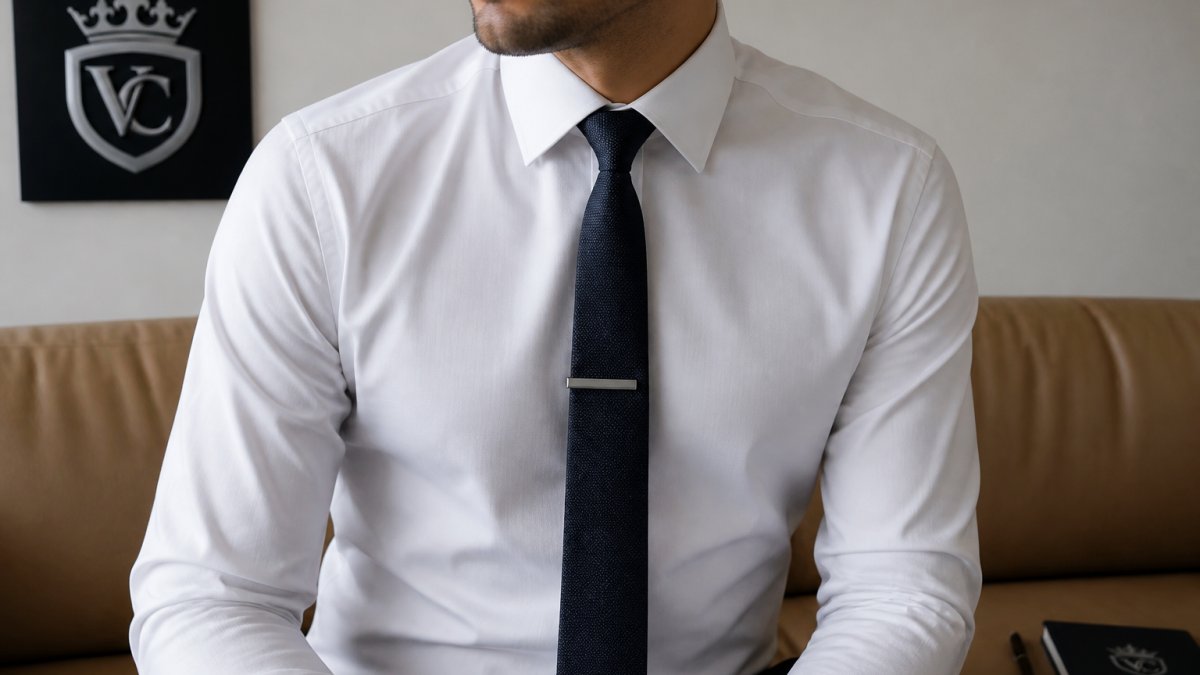
Tie bars are typically 2 to 3 inches wide and sit flat against both the tie and shirt. They distribute pressure evenly across a wider surface area, which means less concentrated force on any single point of fabric. This makes them gentler on delicate tie materials.
Tie clips, by contrast, use a hinged or spring-loaded jaw to grip the tie. The clip pulls the fabric inward, creating a more pronounced hold but also concentrating pressure at the clip's edges. Over time, this can leave creases or even small marks on premium fabrics. Clips are also typically more visible and bulkier.
The positioning differs too. A tie bar sits horizontally and is meant to be seen as part of your outfit. A tie clip can be positioned at various angles and is often designed to be less noticeable. For formal occasions, the tie bar reads as intentional and refined.
Tie Pins for Men: Precision and Subtlety
A tie pin is a thin, pointed fastener that pierces through the tie and into the shirt fabric, holding everything in place with minimal visibility. This approach offers precision that no clip can match. The pin goes through the tie at a single point, usually near the knot or midway down the tie's length, anchoring it firmly without any visible mechanism on the front.
Tie pins for men come in two main styles: the traditional straight pin with a decorative head, and the modern bar pin that works similarly but with a horizontal orientation. Both are far less obtrusive than clips or bars. Many professionals prefer this because the accessory becomes almost invisible once positioned correctly.
The tradeoff is precision. Positioning a pin requires a moment of thought. You're literally threading it through fabric, so placement matters. A poorly positioned pin can look accidental or sloppy. Done right, it looks intentional and sophisticated. The pin also requires a shirt with a sturdy weave, very thin or delicate dress shirts can be damaged by repeated pinning.
Tie pins work best for formal occasions where subtlety is valued. A black-tie event, a wedding, a significant business dinner, these are moments when you want your tie secure and your accessories invisible. The pin delivers both.
Tie Tacks for Men: Secure and Sophisticated
A tie tack is a short pin with a decorative face that fastens the tie to the shirt, typically positioned just below the knot. The tack combines the security of a pin with the visibility of an accessory. It's meant to be seen, which is why tie tacks often feature more elaborate designs than pins. They're also called tie studs in some contexts, though the mechanism is essentially the same.
Tie tacks for men have experienced a resurgence in formal menswear. They sit at the intersection of function and style, they hold your tie in place while adding a deliberate detail to your outfit.
The positioning is specific. A tack sits just below the knot, anchoring the tie to the shirt front. This keeps the tie from swinging or shifting throughout the day, which is particularly valuable if you're moving between meetings, presentations, or events. The tack also prevents the tie from flipping up or folding awkwardly when you sit.
One consideration: tie tacks require a small hole or passage point on your shirt. Most dress shirts accommodate this, but very delicate fabrics can be problematic.
How to Keep a Tie in Place Without a Clip
Not every situation calls for a visible accessory. Sometimes you simply want your tie to stay put without adding another element to your outfit. Several methods work well for this, each with specific advantages depending on your shirt, tie, and occasion.
Tie Chains and Tie Straps
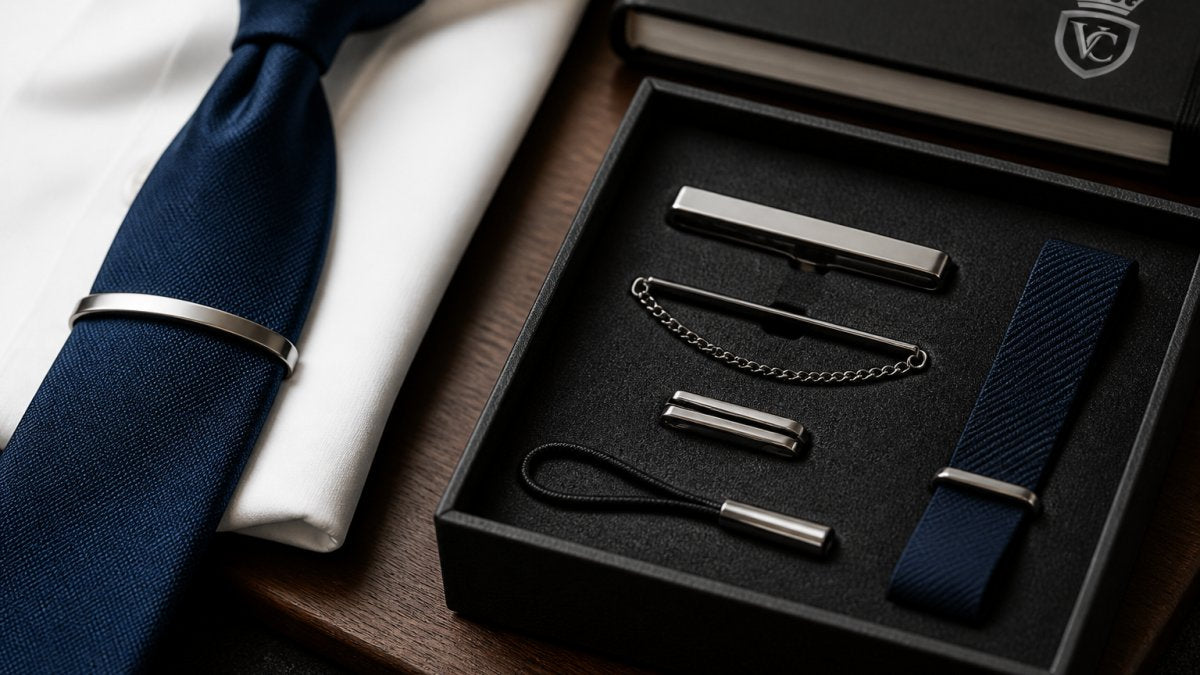
A tie chain is a thin chain that connects from a button on your vest or waistcoat to a loop sewn into the back of your tie, keeping the tie from swinging or shifting. This is a classic formal-wear solution, particularly common in black-tie and white-tie settings. The chain is hidden, it runs behind your jacket, so it adds no visible bulk or aesthetic consideration. It simply works.
Executive Crown Sterling Silver Cufflinks →
Tie straps function similarly but use a fabric strap instead of a chain. Both accomplish the same goal: they anchor the tie's back to your waistcoat or vest, preventing forward movement. This is especially useful if you're wearing a three-piece suit or formal vest.
The limitation is obvious: you need a vest or waistcoat for a tie chain to work. For business casual or single-breasted jacket wear, this isn't an option. But for formal occasions where you're wearing a three-piece suit, a tie chain is the most elegant solution. It's completely hidden, completely effective, and completely traditional.
Hidden Fasteners and Magnetic Solutions
Modern innovation has introduced alternatives that work without visible hardware. Some ties now come with small loops sewn into the back, designed to catch on a button or loop on your shirt. Others use magnetic fasteners, tiny magnets embedded in the tie and shirt that hold the tie in place through subtle attraction rather than mechanical force.
Magnetic solutions are still emerging in the market, but early adoption suggests they work reasonably well for light-duty holding. They're not as secure as a pin or clip, so they're best suited for situations where your tie isn't likely to get jostled around.
Hidden fasteners that rely on existing shirt buttons or loops are more reliable. The mechanism is simple: a small loop on the tie's back catches on a button on your shirt. It's invisible once in place and requires no additional accessories. The downside is that not all ties come with these loops, and not all shirts have buttons positioned correctly to catch them.
Choosing the Right Accessory by Occasion and Dress Code
The best alternative to a traditional tie clip depends entirely on context. Different occasions call for different solutions, and understanding this distinction helps you choose an accessory that feels appropriate rather than forced.
Black-tie and white-tie events demand invisibility or intentional elegance. A tie pin is your best choice here, it keeps everything secure while remaining nearly invisible beneath your jacket.
Business formal and business professional settings offer more flexibility. A tie bar works well here, it's visible enough to read as intentional but refined enough to belong in a boardroom. A tie clip is also appropriate, particularly if it's well-designed and not overly bulky.
Business casual and smart casual settings typically don't call for tie accessories at all. If you're wearing a tie in a business casual environment, you're already making a statement. Adding a clip, bar, or pin can read as overdone.
Formal events outside of work, weddings, galas, anniversaries, depend on the specific dress code. Black-tie calls for a pin or chain. Cocktail attire allows for a bar or clip. Semi-formal gives you flexibility. When in doubt, choose invisibility: a pin or chain keeps your tie secure without adding visual noise.
The material of your tie matters too. Delicate silks, vintage fabrics, or heirloom ties deserve gentler treatment. A bar or pin is safer than a clip. Sturdy wool ties or everyday business ties can handle clips without concern.
Conclusion
The right alternative to a traditional tie clip depends on your occasion, your tie's fabric, and how visible you want your accessories to be. Tie bars offer refined minimalism. Pins provide invisible security. Tacks add intentional detail. Chains and straps work within formal three-piece settings. Each serves a purpose, and each signals something different about how you approach your appearance.
For men who understand that accessories matter, VALCREST™ offers cufflinks crafted in sterling silver and vermeil that embody the same discipline and refinement you'll apply to choosing your tie accessory. Our Executive Crown Sterling Silver Cufflinks at $229.00 and Founder's Edition Shield Cufflinks at $329.00 are designed for professionals who understand that every detail, from how your tie is secured to the cufflinks at your wrists, speaks to your standards. These pieces endure for generations, just like the discipline required to dress with intention. Get started with VALCREST™ and elevate your complete professional appearance.


Frequently Asked Questions
What is the difference between a tie clip and a tie bar?
A tie bar is a slim, minimalist fastener that slides across the tie horizontally, typically positioned between the third and fourth buttons of a dress shirt. A tie clip, by contrast, uses a spring mechanism to grip the tie from both sides. Tie bars are considered more refined and modern in professional settings, while tie clips offer a stronger hold and work with thicker tie fabrics. Both secure the tie and prevent it from swinging, but tie bars create a cleaner aesthetic for business attire.
Are tie pins for men a practical alternative to traditional clips?
Yes. Tie pins use a single pointed post that pierces through the tie and shirt fabric, anchoring the tie firmly in place. They work well for formal occasions and formalwear where a secure hold is essential. The main trade-off is that tie pins require careful positioning to avoid visible holes in premium fabrics, and they demand precision when fastening. For men who wear ties regularly and value durability, tie pins offer excellent security without the bulk of a clip.
How do tie tacks for men compare to other neckwear accessories?
Tie tacks are decorative fasteners with a post and backing that secure a tie to the shirt with a fixed hold. Unlike clips or bars, tie tacks are purely functional and ornamental, making them ideal for formal events and special occasions. They sit higher on the tie than clips and create a polished, intentional appearance. Tie tacks work best with medium to lightweight ties and are less practical for daily business wear since they require more setup time and care when removing the tie.
What's the most discreet way to keep a tie in place without a visible accessory?
Tie chains and hidden fasteners offer subtle alternatives for men who prefer minimal visibility. A tie chain connects the tie to a shirt button or vest, holding it in place without a visible clip or bar across the front. Magnetic solutions also exist, embedding small magnets into the tie and shirt to create an invisible hold. These options appeal to men in business casual or minimalist dress codes who want security without drawing attention to the accessory itself.